Fatsia Japonica
There are few plants as impressive as fatsia japonica, or Japanese aralia. Upon first glance, they are truly striking. Their enormous saw-tooth leaves with bold, bright green veins stretch outward with confidence, as though beckoning you to come closer. Native to southern Japan, the fatsia is known as “yatsude”, meaning “eight fingers”, referring to the eight lobes of each alluring leaf. In their natural environment, they can grow up to 16 feet tall and wide. Here in Bend as a houseplant, they hover around half that size.
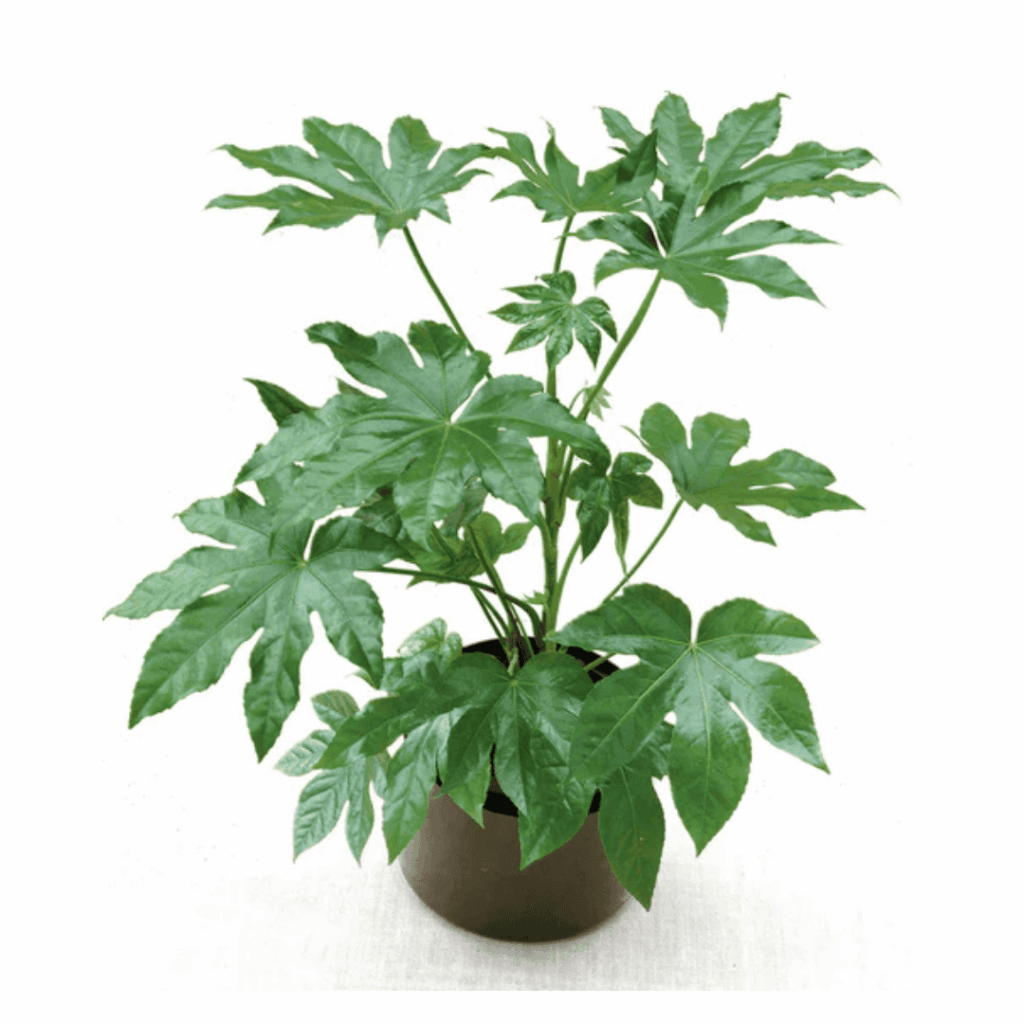
A variegated cultivar of fatsia japonica, dubbed “Spider’s Web”, has frosty white-tipped leaves, as though a light dusting of snow recently rested upon the plant. The variegation pattern actually changes as the plant ages, emerging as pure white then transitioning to speckles. Eventually, the leaves will get a tri-tone color effect as the white and green fade into each other!
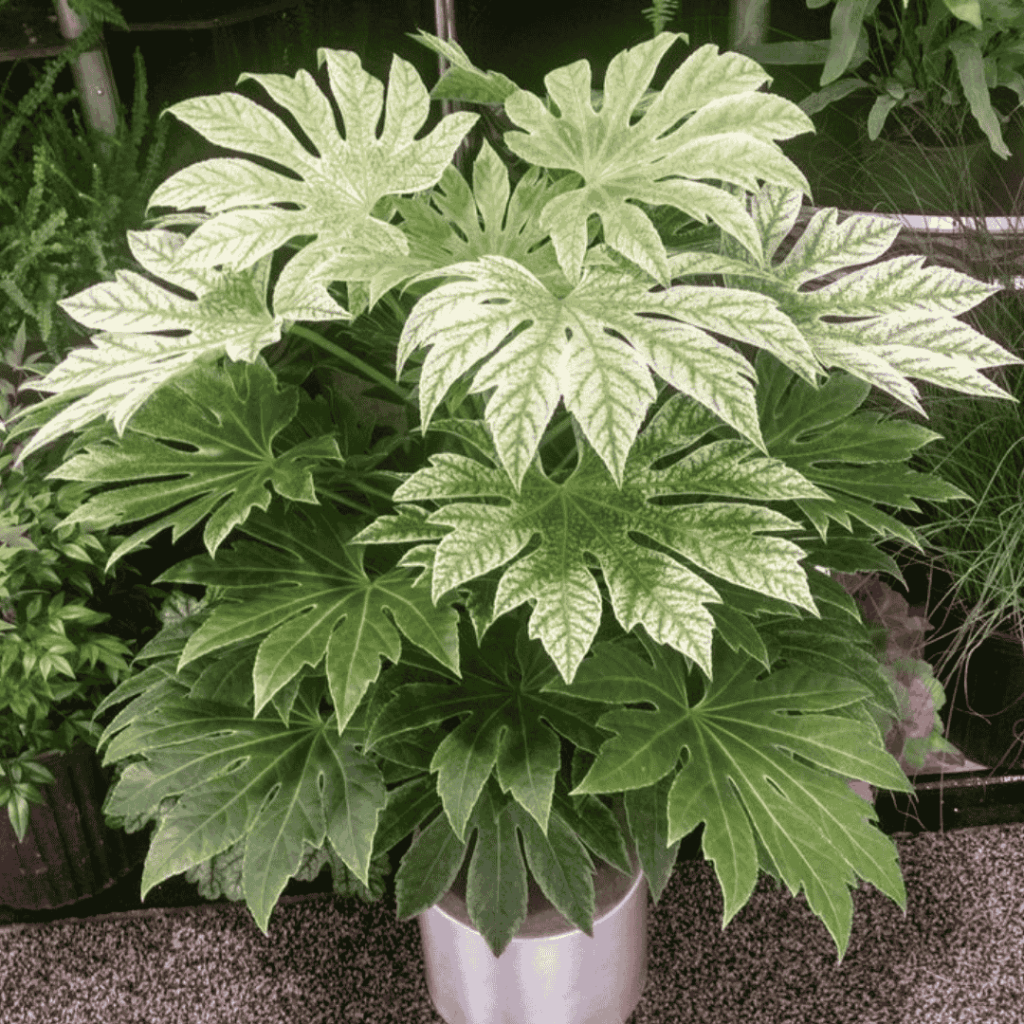
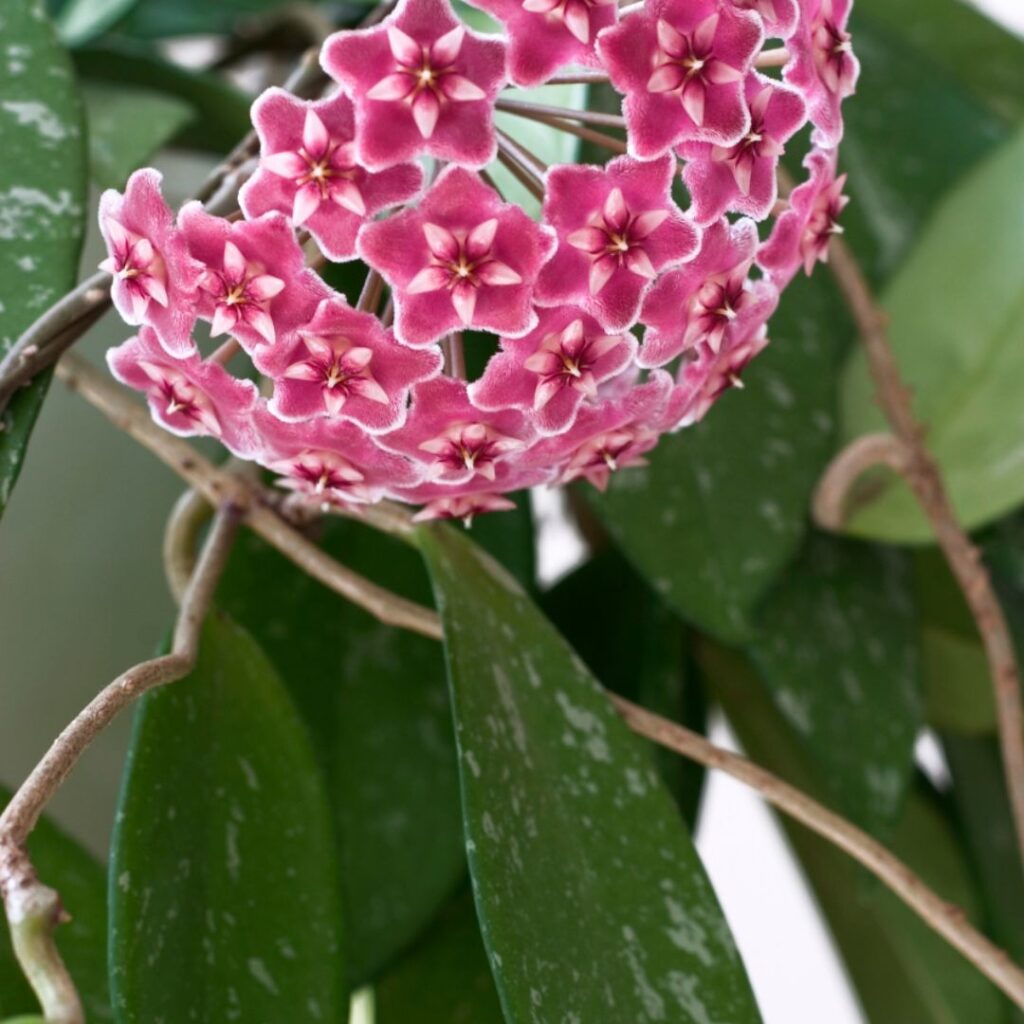
Both varieties have the ability to produce unique puffball flowers followed by black fruit in the fall. This is rare indoors but more likely in a greenhouse. The foliage, including the blooms, are generally non-toxic to pets, which is always a nice feature!
When caring for this giant beauty indoors, avoid direct sun but provide ample bright light to encourage those gorgeous greens to keep on greening! Use a rich, well draining potting soil with a fair amount of perlite in it and water around every 10 days depending on how fast it dries out. As with most tropicals, providing enough humidity is going to be your main challenge. Make sure it’s placed in a location where cold drafts or heat vents aren’t changing its surrounding temperature frequently. If you follow these tips, you’ll not regret bringing a fatsia japonica into your home. It’s an easy way to create a taste of the tropics here in the high desert!