Euphorbia
Euphorbia is a diverse family of flowering plants from annuals and trees to succulents and other ornamental plants. You may be surprised to learn that the poinsettias you buy during the holiday season are actually Euphorbias!
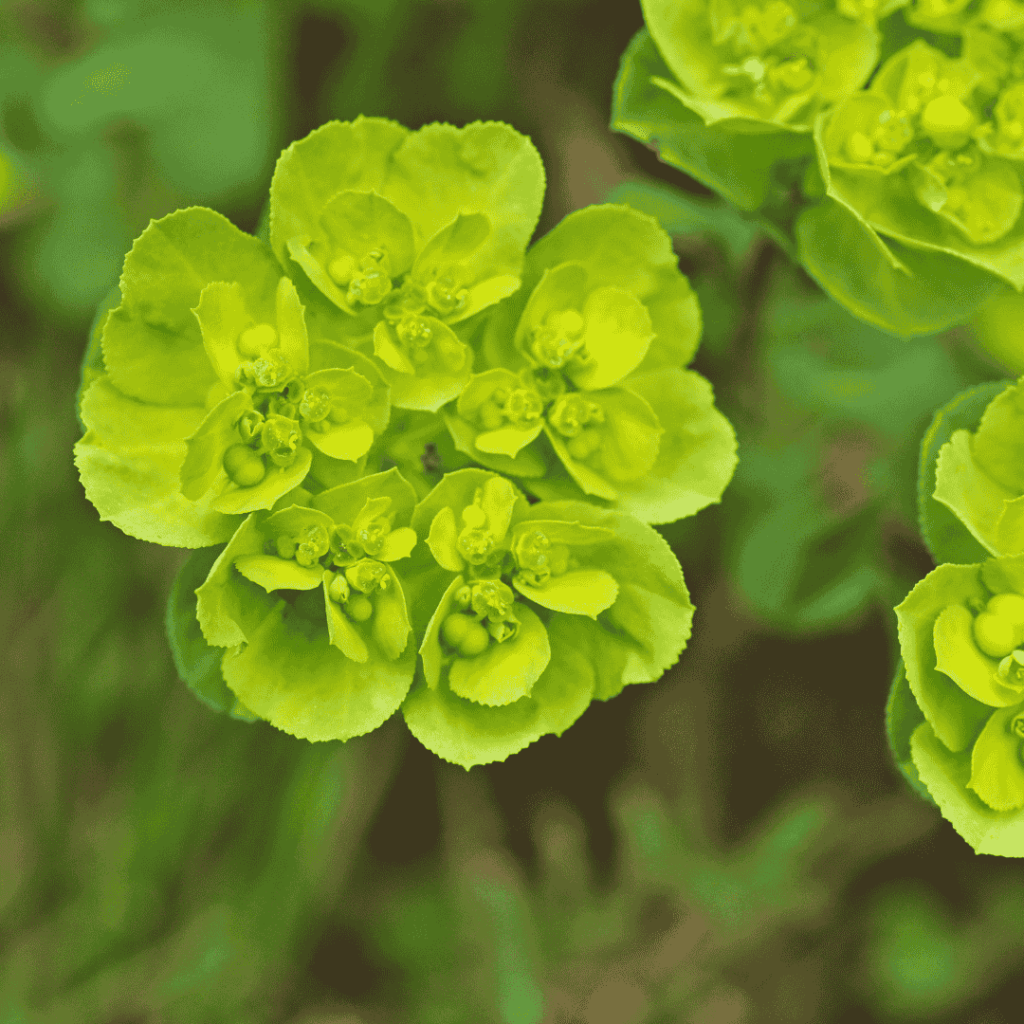
While there exist many different Euphorbias, they all generally share a unique floral structure. What you would call a whole flower on many Euphorbias is actually many little flowers that, together, create a big flower. The five flowers on this Euphorbia serrata come together to look like five petals on a single flower!
A fun fact about Euphorbia is how its common name was derived. Euphorbias contain a milky sap that when ingested, causes a number of side effects, namely diarrhea and vomiting, or purging. In some cases the milky sap has been known to temporarily blind people and pets so keep that sap in your plant and not on you! In old English, the word for purge is ‘espurge’. Thus, the common name for Euphorbia became spurge!
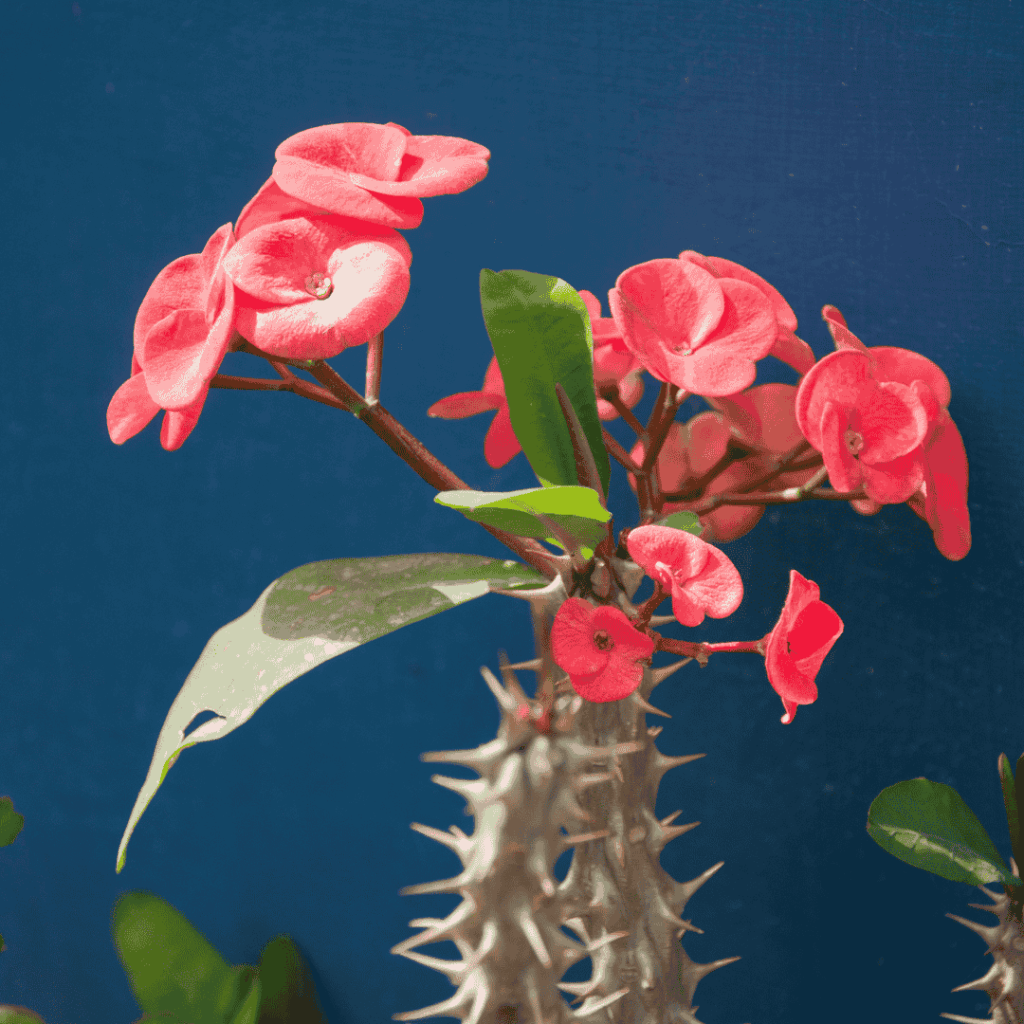
The most common Euphorbia you’ll see as a houseplant at Moonfire is the crown of thorns, or
Euphorbia milii. The crown of thorns is a unique succulent with woody, thorned stems, said to have been worn by Jesus at the crucifixion. When in full bloom, bright green leaves give way to striking red flowers that really stand out against the gnarly brown thorns. If you want a unique houseplant, this is really going to turn heads.
Bright, direct sunlight is essential to keeping Euphorbia milii in bloom. Let the soil dry out completely in between waterings. This will land you at watering around every 3 weeks in the winter and every 10 days in the summer. Fertilize once a year in the spring with a water-soluble fertilizer. Trim dead leaves and branches to allow the plant to focus as much as possible on its flower production. In addition, ensure that it is potted in a relatively small container, as the crown of thorns likes to be a little rootbound.
Another staff favorite is the Euphorbia trigona. Also known as the African Milk Tree. This showoff can rather quickly grow to heights of over 6′ even when kept inside as a houseplant. Typically sold as one small stalk in a 4″ pot, very soon you will see new limbs growing out from the main stalk you started with. Overtime you may find that your trigona needs a little support to keep it from falling over. As the new limbs grow in it can put the plant off balance until it evens itself out with new growth which it naturally does.
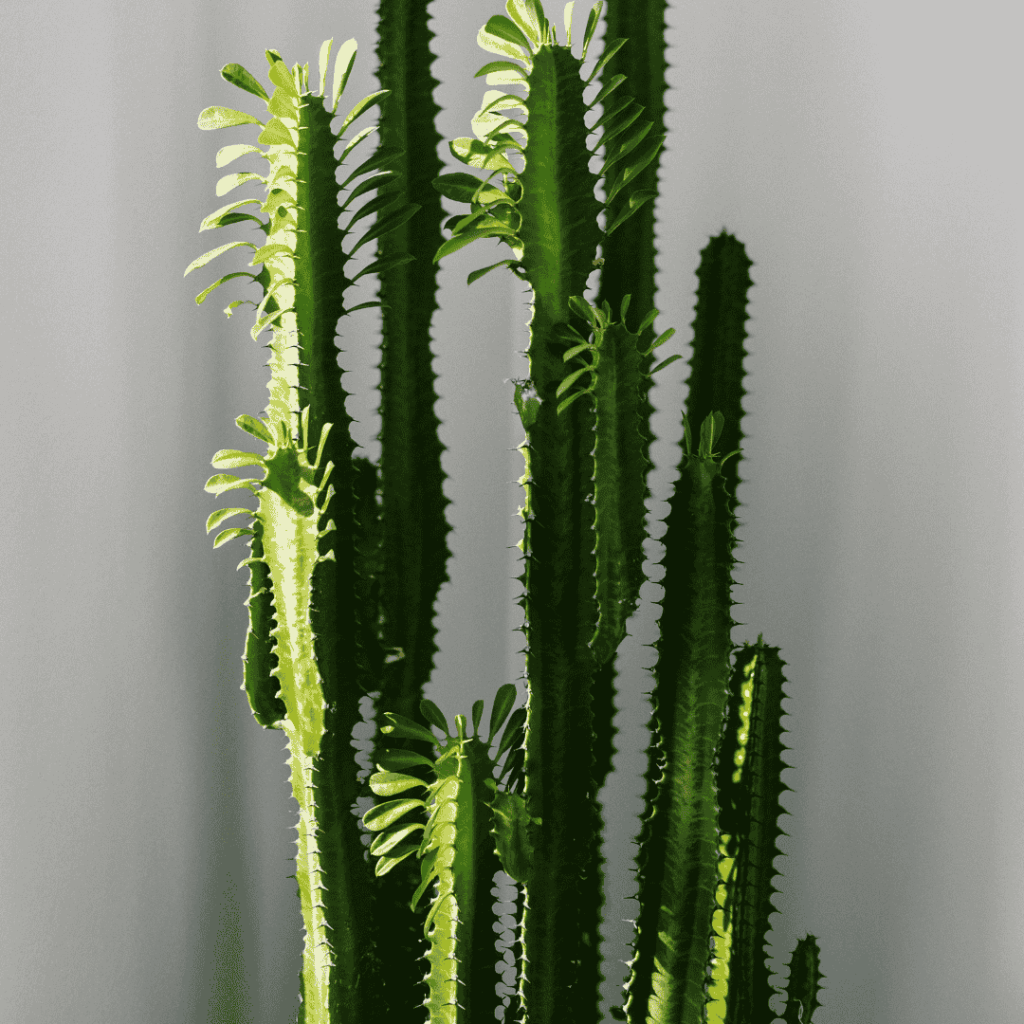
You can find these succulents in green and a pretty purple color. Yes, the trigona is a succulent! While the ridges and spines certainly give the trigona a cactus look they are in fact succulents. They cleverly store water in their leaves as an adaptation from growing in areas with long periods of drought. Don’t be worried when your trigona drops leaves. They simply don’t need them anymore.
Just like the milii, your trigona wants to be in a small pot, sunkissed daily and watered infrequently.