Lithops
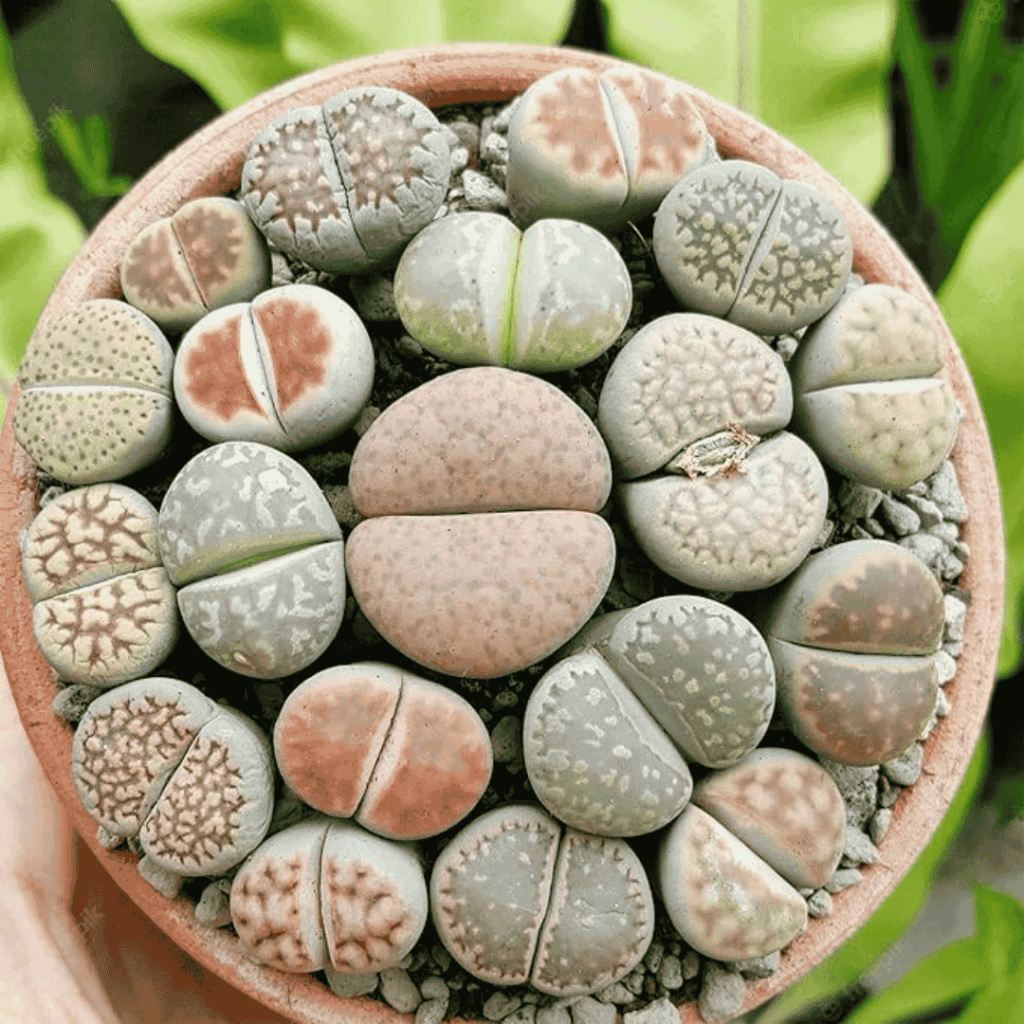
Derived from the ancient Greek word ‘lithos’ meaning ‘stone’ and ‘ops’ meaning ‘face’, these incredible little succulents look just like clusters of rocks sprouting from the soil. Each one is composed of two, stemless, half moon leaves fused together in the middle. When a new leaf sprouts, the existing leaves part to allow the new one to emerge.
One of the most remarkable traits of the lithops is their ability to adapt to their environment, namely, changing color. Found growing naturally in areas of Namibia and South Africa, lithops can camouflage to better blend in with their environments. This is why you may see varying patterns and color transitions from one plant to the next.
We’ll be honest, care instructions for this one are easier given than performed. These are extremely picky succulents from a unique habitat and will require care unlike any of your other houseplants. Pinning down the right watering schedule is the hardest part about coaxing lithops to thrive. Too much water, and their skins will retain too much moisture and burst. Planting them in too rich of a soil will lead to the same outcome. For best results, concoct a coarse soil mixture containing sand, rocks and perlite, avoiding anything overly moisture-retentive. You can simply pick up a bag of our G&B Organics cactus mix.
We recommend watering lithops only once every 4 months during the summer and fall. Avoid watering during heat waves, as they go dormant during the summer months and can rot when exposed to excessive moisture at this time. Interestingly enough, they are most active in the fall. This is when new growth and even flowering is most likely. They generally prefer NO water during the winter and spring months.
Pay great attention to the ambient temperature around your lithops as well. While they prefer bright sunlight all day, too much heat from a furnace or unventilated greenhouse will kill them quickly. Low light will lead to rotting or fungus. Start out with a south or west facing window with an unobstructed view of the sky.