Poinsettia
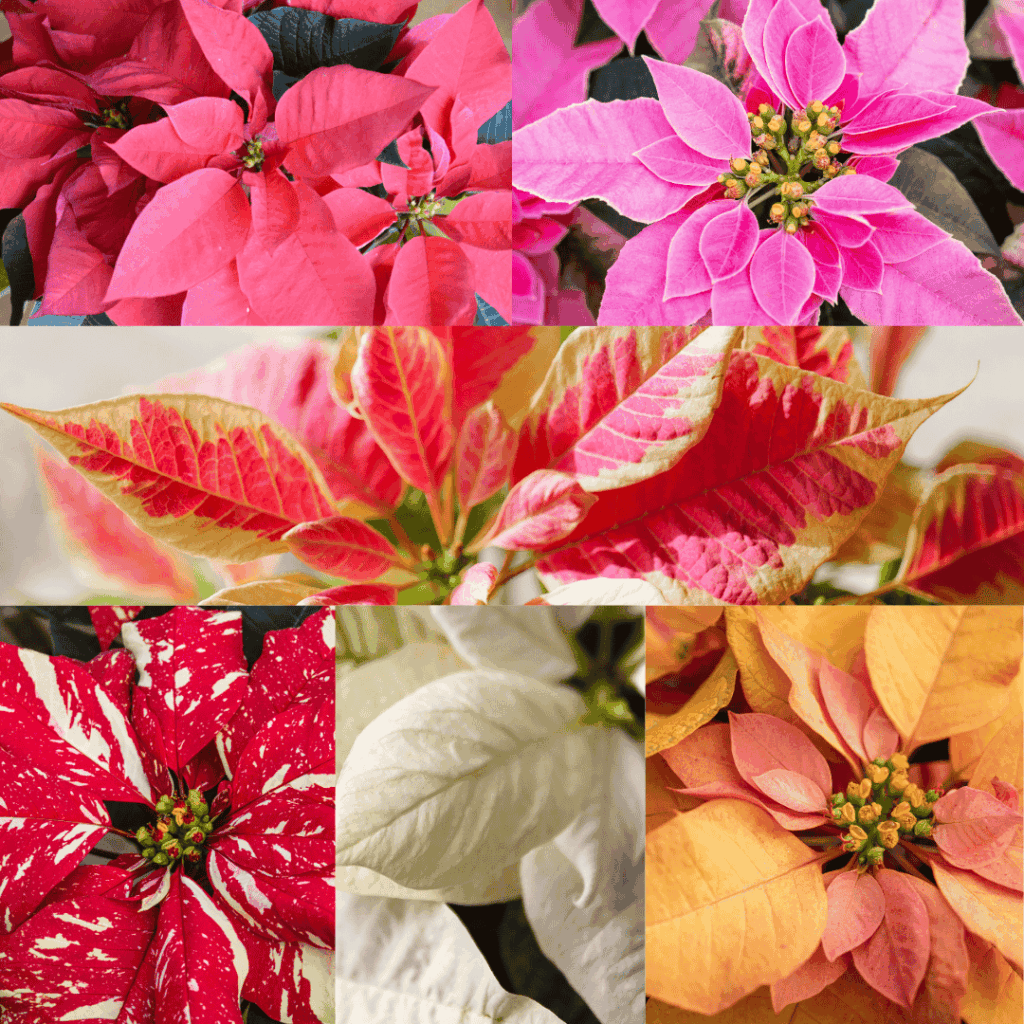
Looking out the frost-framed windows of the nursery in winter, as the greenery of summer fades into varying shades of brown, and the Ponderosas get their first taste of snow-flocked needles, it’s hard not to let the lack of color weigh on your soul. Do not fret, however, because this is the time of year when Poinsettias swoop in to save the day. Their splash of crimson color paints the inside of the nursery with cheerful abandon, harboring the power to pep up our dreary spirits instantly! Sick of the classic red Poinsettia? Come see our selection this holiday season. There are so many color options that we can’t even choose just a few ourselves!
Belonging to the Euphorbia family, Poinsettias are truly unique specimens. Their red “flowers” are actually not flowers at all. They are leaves! Small groupings of yellow cyathia found in the center of the flaming red leaves are where the real flowers are. It takes 6-8 weeks of darkness for Poinsettia leaves to change from green to red. Some varieties develop salmon pink, white, or even spotted leaves!
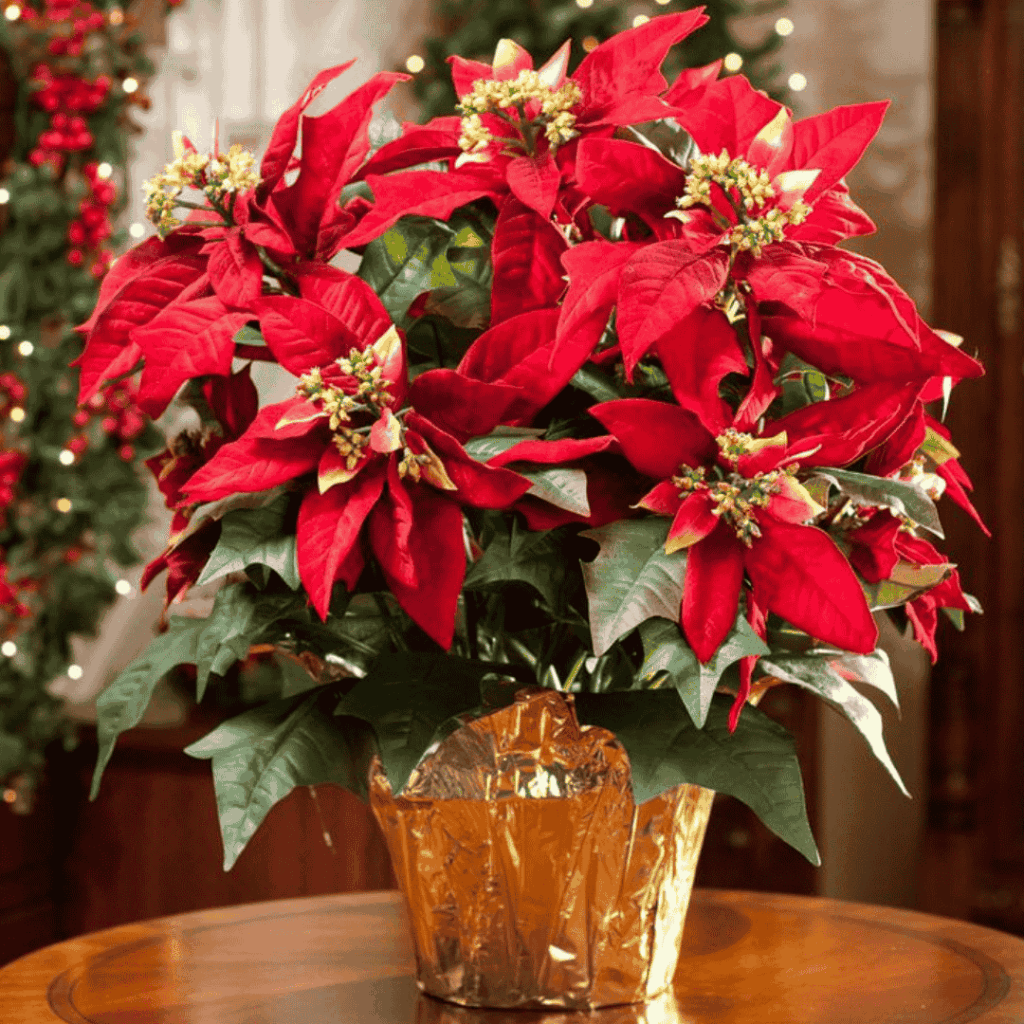
Though the Poinsettia appears during holiday season, it was utilized by the Aztecs for medicinal purposes long before it was associated with Christmas. Known as ‘cuetlaxochitl’ in native Aztec language, the Poinsettia is indigenous to Mexico and Central America. The milky sap once thought to be deadly in the western world has long been cultivated for fever-reducing purposes in indigenous medicine! It’s only mildly irritating if exposed to orifices or ingested in large quantities, so feel safe bringing one home knowing it’s harmless to your family.
Poinsettias, while beautiful, are delicate. They do not tolerate fluctuations in temperature, hot or cold. Sometimes leaving them in a chilly car when you’re running errands can be their demise, equally so if they’re placed on a mantle above a fireplace or furnace. They need to be watered at least once a week. Drooping leaves are a telltale sign of thirst. Keep in mind that poinsettias usually come wrapped in metallic mylar pot covers. While these provide insulation and pizazz, they are also great at trapping water. Make sure you dump excess water from the bottom or take the plant out of the cover when you water it to prevent rotting.
Many Poinsettia owners toss out their plants after the holidays. A fun fact about Poinsettias is that you can keep them year round! After they bloom in the winter, place your Poinsettia in a dark, cool (50-60 degree) spot and reduce watering to every other week. It’s normal for leaves to drop during this period. In the spring, prune the stems back halfway and repot it in fresh soil in a sunny window. Fertilise it monthly in the summer, and you should see new leaves start to sprout. Once October 1st hits, stick them in a closet during the night and put them in the sun during the day time. They should get absolute darkness for 13-16 hours and sunlight for 8 hours out of the day for 8 weeks. This is what triggers their striking color change, just in time for the holidays. It’s a high maintenance schedule to follow, but sometimes worth not spending the money each year on a new Poinsettia!