Ivy
A lot of Pacific Northwest gardeners have as negative of an association with Ivy as they do blackberry. Which we can certainly sympathize with as nearly everyone on our staff has at one time or another helped with a vine removal project. The good news is that there are a few different ivy houseplants that you can keep without the fear of being over run!
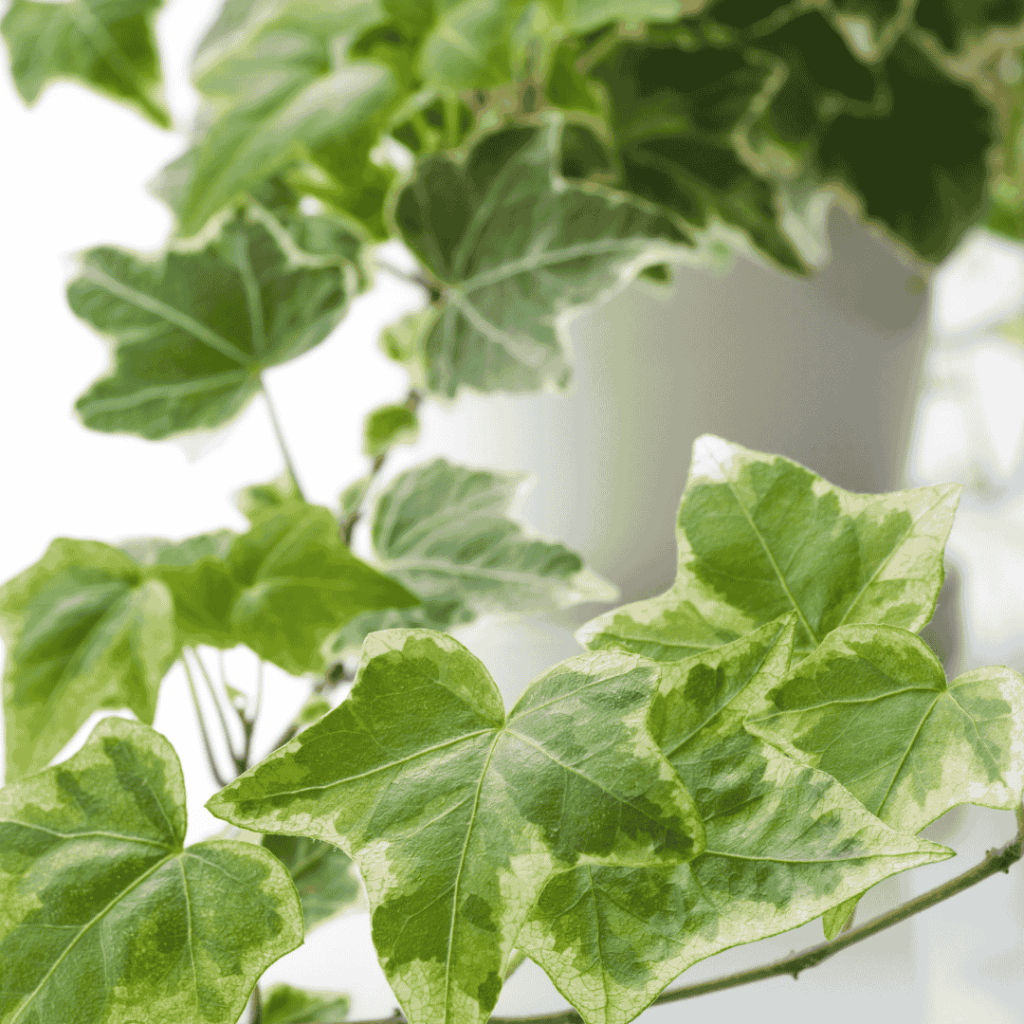
One of the more common houseplant ivies, is the English ivy. Offering a fun variegated star-like shaped leaf, this houseplant knows how to trail somehow weightlessly. Perfect for a hanging plant that can’t be secured into a stud.
The botanical name for English ivy is Hedera helix. If never cut back to propogate you could get this vine to grow 80′ long! That’s long enough to circle all the way around a room. Which honestly would look really cool.
You don’t need a lot of direct sunlight to keep this vine happy. Just a nice bright room would be perfect for an ivy to do well. Be sure that you do have enough bright light though. Placing an ivy in too dark of a location will just produce a leggy vine trying in vain to reach adequate sunlight.
Regular fertilizing will keep your vine thriving. Planting into rich, well draining soil is preferred. Water thoroughly each week until water runs out of the bottom of the pot so that you are sure that all of the roots got a nice drink.
You’ll know your plant is ready for a bigger pot when you notice that your plant is drying out too quickly. This is typically a sign of a plant being rootbound. The balance of roots to soil has shifted and is in need of attention. Turn the pot upside down and you will likely notice roots growing through the drainage holes. Select a new pot that is no more than 1-2″ bigger in height and width. Moving your plant into a pot that is too big will commonly only lead to root rot since there will be too much soil that will be retaining moisture.