Kinnickinnick
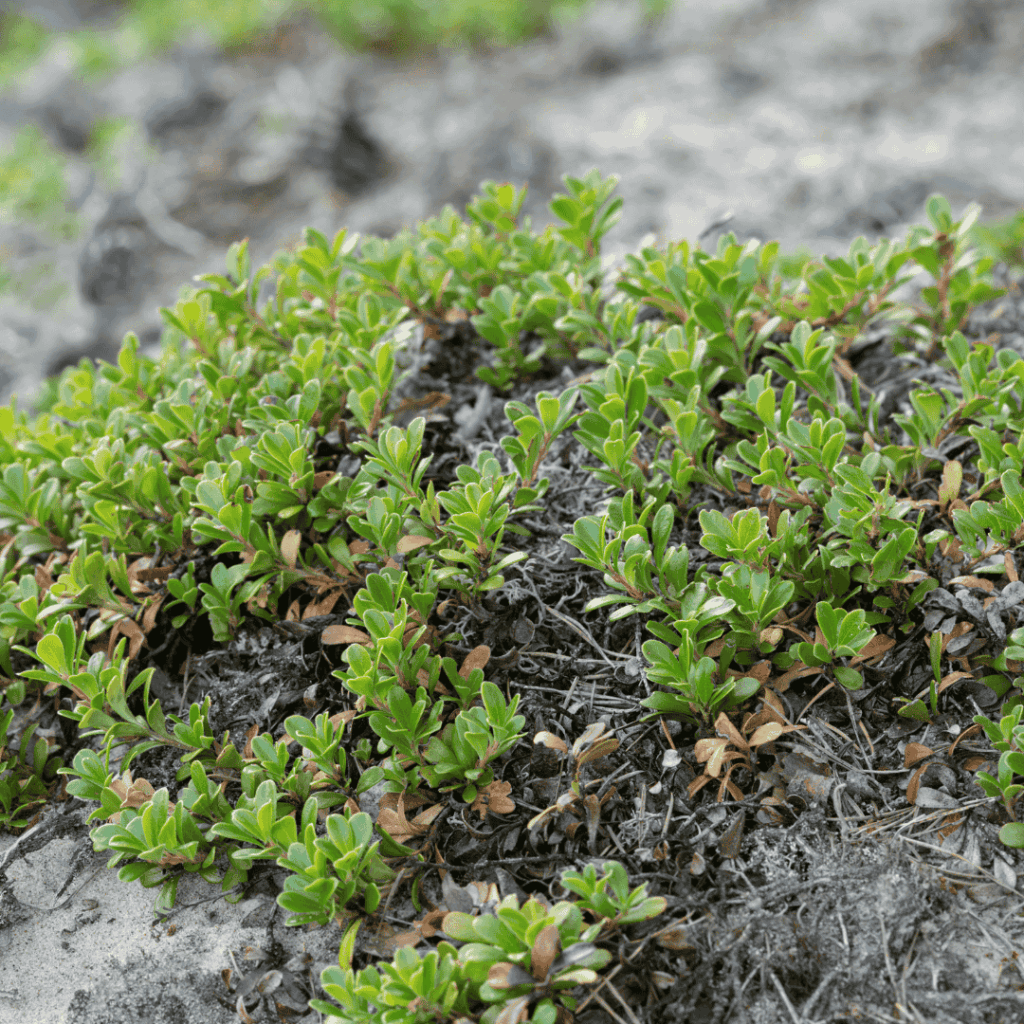
Kinnikinnick (Arctostaphylos uva-ursi) is a popular low growing shrub widely used as a drought tolerant ground cover. This trailing, evergreen shrub is typically 6-12 inches tall and can spread out about 10 to 15 feet wide, making it an excellent choice for erosion control and slope stabilization. It’s also known for being deer resistant as well as supporting birds and pollinators.
This mat forming shrub has woody reddish-brown branches and small, shiny leaves. Leaves are thick and stiff and 1 ½ inches long and about ½ inch wide. Leaves remain green for the first 1 to 3 years before annually turning a reddish purple and falling off in autumn. Dried leaves were used as the main component in many traditional North American Native smoking mixes, known collectively as “kinnikinnick”, Algonquin for “smoking mixture.”
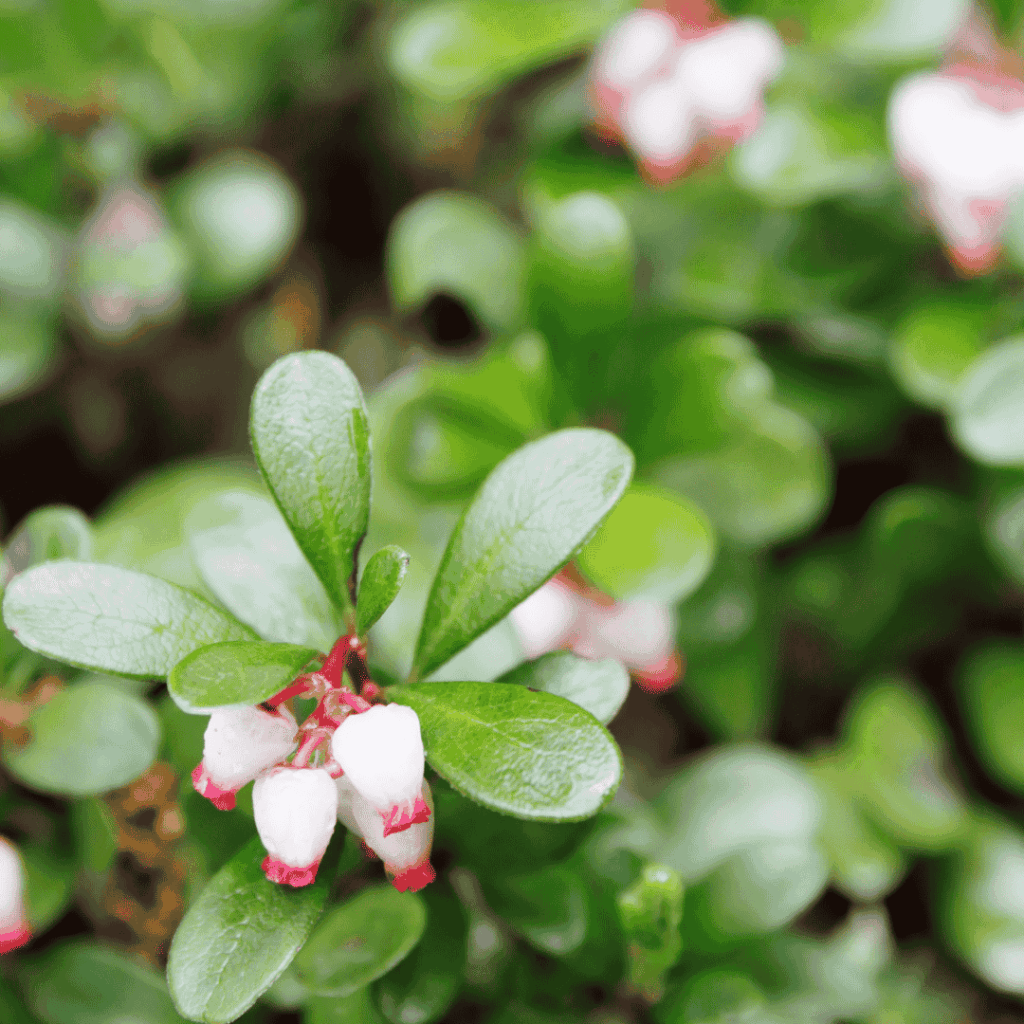
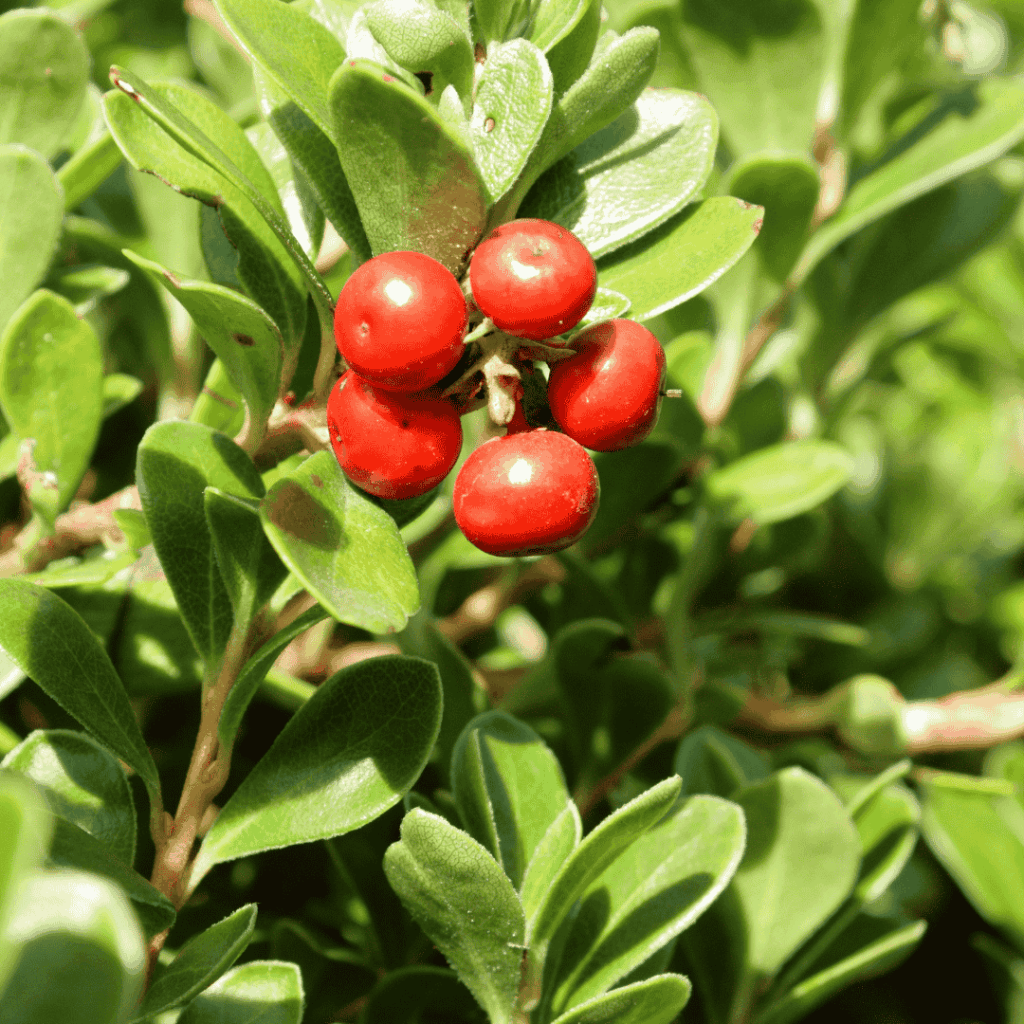
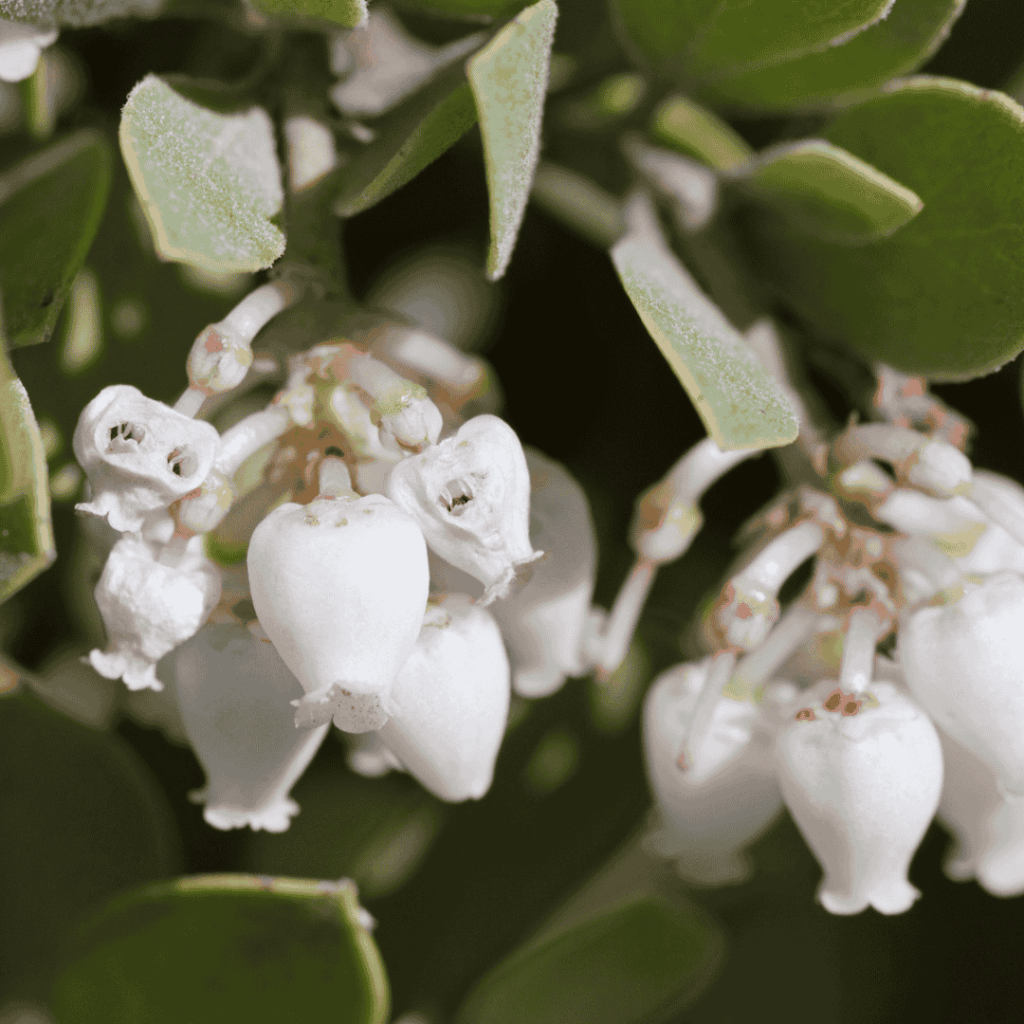
The bell shaped flowers are pinkish white and hang in clusters. The flowers show up in late winter, blooming from March to June, followed by berries. The berries can be eaten raw, but cooking them brings out their sweetness, making them great for jams and preserves. Kinnikinnick grows in full sun to part shade and is tolerant of poor, dry soils which makes it a popular choice for urban settings. It’s most often propagated from stem cuttings due to the seeds being very difficult to germinate.
Arctostaphylos uva-ursi grows all over the world and can be found throughout North America. You will see this plant on many Oregon hikes growing on rocky hillsides and sandy flats to ocean bluffs, mixed woods and coniferous forests.