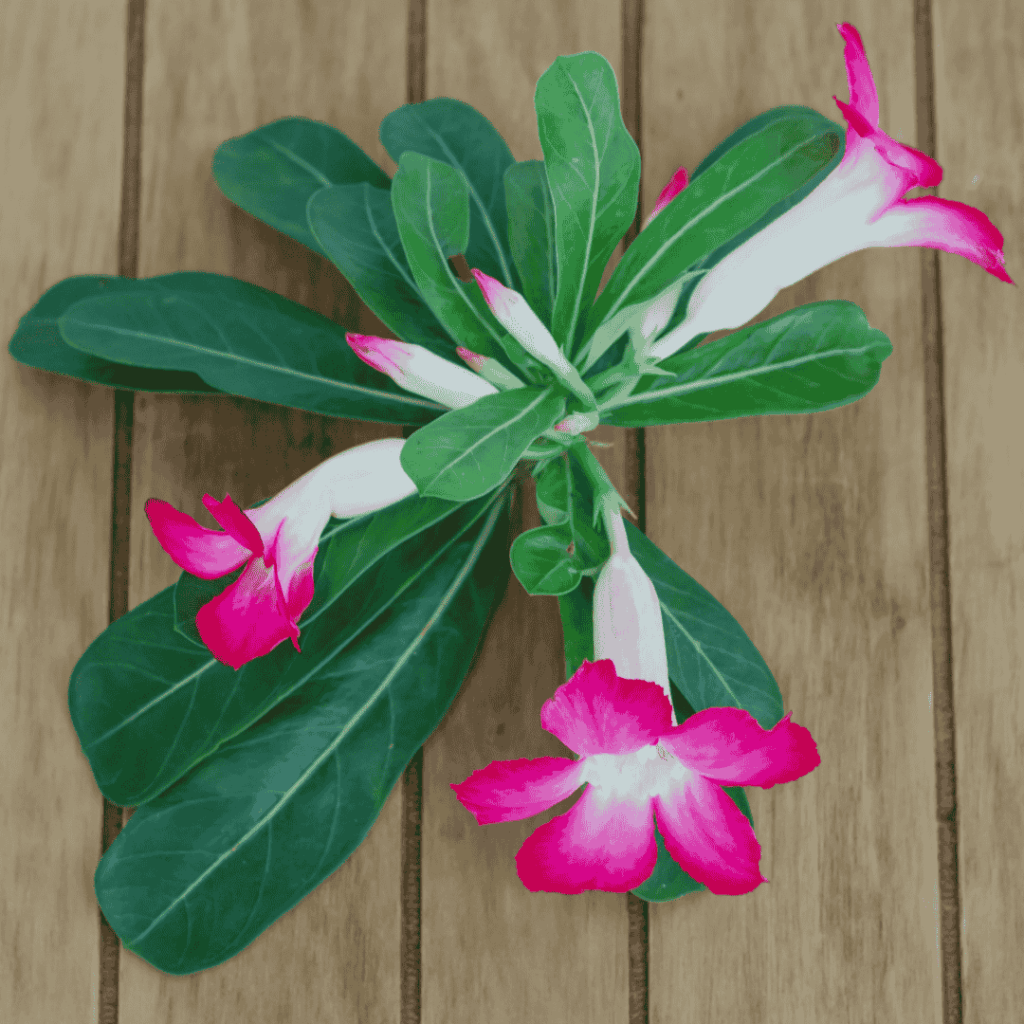
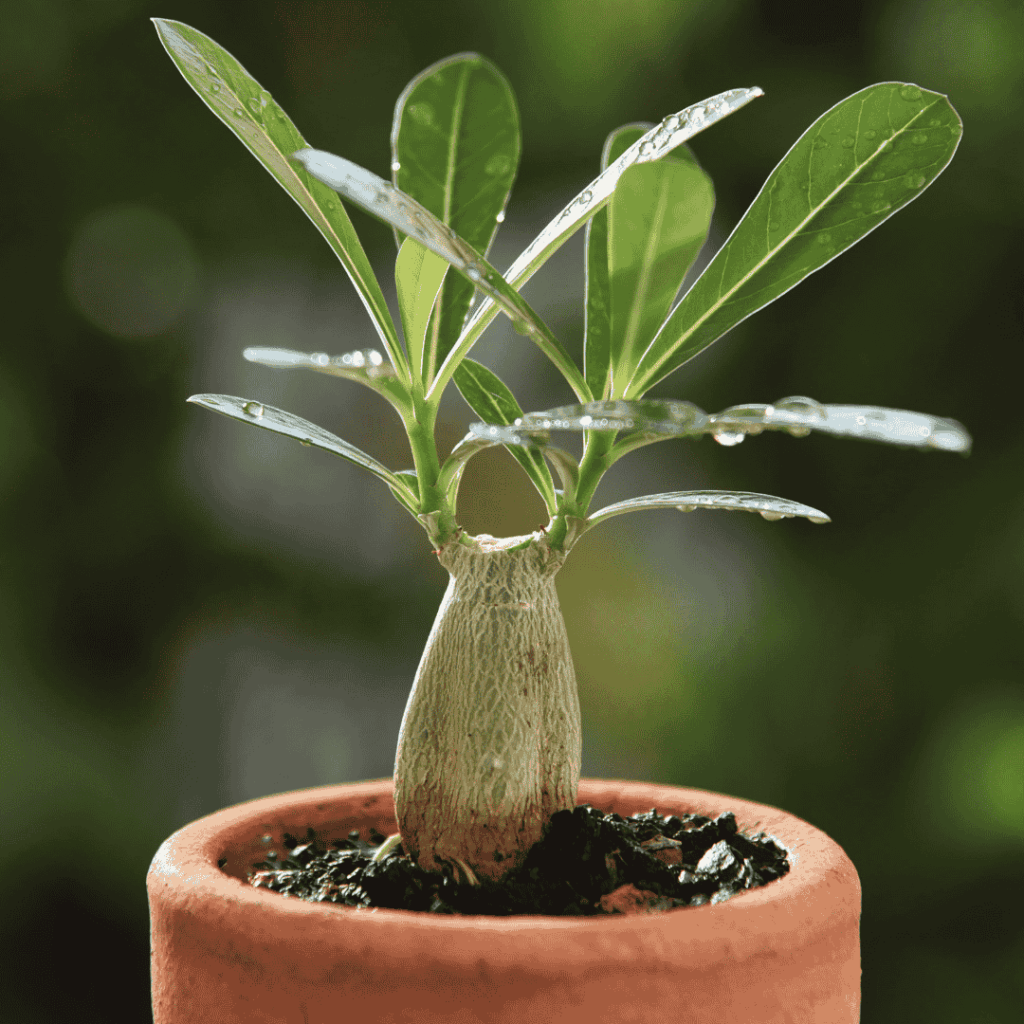
Adenium, also known as desert rose, are a species of flowering houseplants known for their bright plumeria-like blooms and bulbous trunks, making them especially popular with bonsai enthusiasts. The sap of some adenium varieties is actually widely used in parts of Africa as arrow poison for hunting large game. So watch out if you have pets that love to chew on your houseplants!
We’ll be honest, these plants are not for beginners. They’re pretty easy to upset, so make sure you’re committed to putting in the elbow grease to make it happy before you take the leap!
Similar to ponytail palms, desert roses store water in their trunks to get them through periods of drought, so it’s easy to see that overwatering can be a huge issue. Treat them like succulents. Only water when their soil is COMPLETELY dry and reduce watering drastically in the winter. This timing is hard to get right, so it’s important to watch your plant for signs of stress i.e. yellowing, limp leaves.
A gritty potting soil mixed with pumice, perlite and sand will simulate its natural environment best and provide the best drainage. Always plant it in a pot with a drain hole and ensure that water is pouring out the bottom rather than accumulating. Note that they are okay with being snug in their pots. Don’t worry if yours is a little rootbound. Really try to wait to re-pot it until it’s absolutely necessary.
Another challenge is getting these puppies to bloom. They’re just not as cool without flowers! They’re called desert ROSES for gosh sake! The more light you give them, the more likely they are to flower. Try setting them in a south facing window and watch how they respond. Ideally, you’ll see new growth and even buds beginning to sprout. Supplementing with a high nitrogen fertilizer in the spring and summer months will help too. There’s definitely a learning curve with this plant, so be prepared.