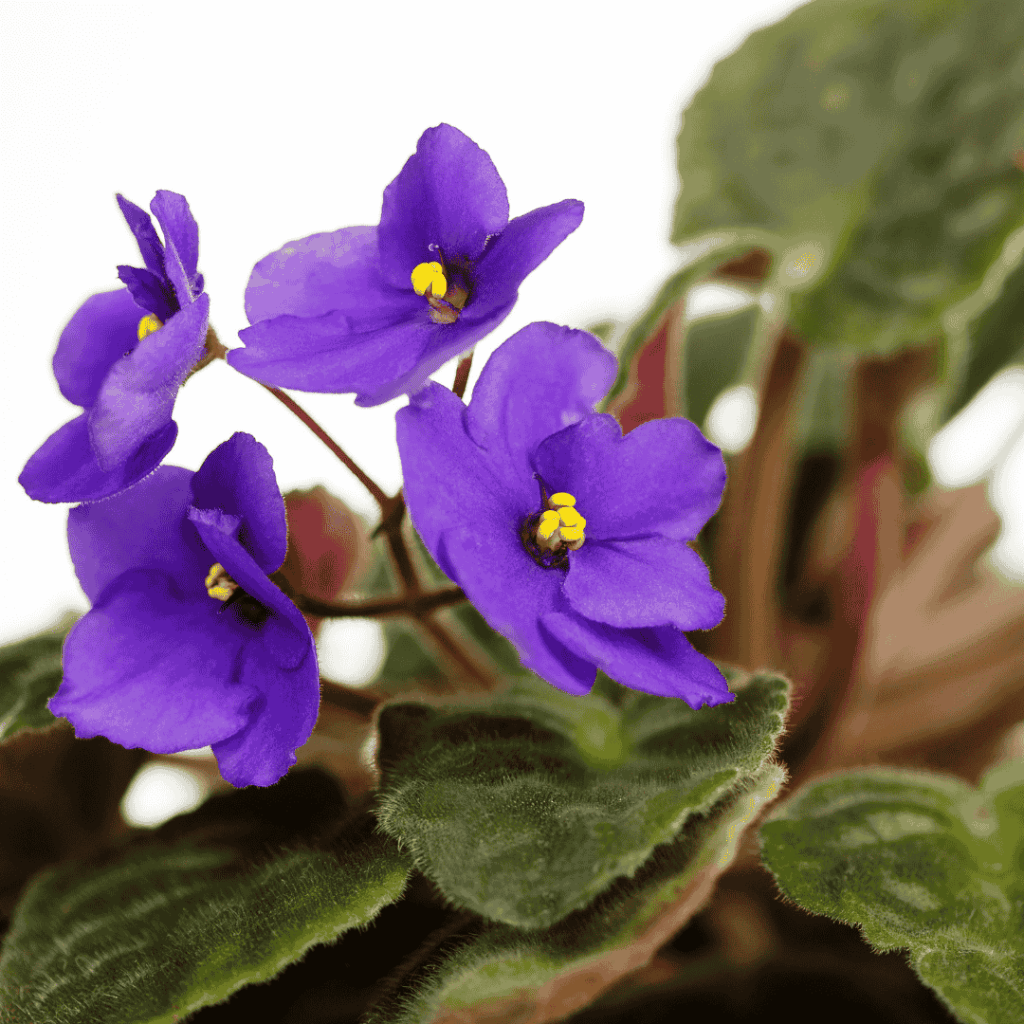
African Violet, or Streptocarpus Saintpaulia spp., is a classic stunner that flies off our shelves each week. Their fuzzy round leaves grow in clusters culminating in adorable pastel flowers. When looking for a gift to give someone special, this is the houseplant people flock to 90% of the time. It comes in many different colors that are all equally impressive.
It can take a beat to learn how to make them happy, just like anything that’s really worth it! Our advice is to bottom water with distilled water and feed with african violet food during the spring and summer months. They don’t need fertilizer in the winter because they are technically dormant, though they can still bloom. They’re using their energy to adapt to colder weather rather than accepting fertilizer and trying to push out extra leaves and flowers at a heightened rate. Fertilizing in the winter is akin to downloading a bunch of apps on your phone when its battery is at 1%. They’re just trying to recharge, make it easy on them!
Discovered in the tropical rainforests of Kenya and Tanzania, African violets will love high humidity. Take note that they do not appreciate water touching their leaves. We recommend setting them in saucers of distilled water and letting them soak up their fill. The excess water will evaporate into the air and create a nice humid environment. Passive self-watering pots are a great choice for African violets as well. It will allow them to help themselves to water and wick out the excess.
African violets are epiphytes which are found in nature growing on trees and other plants. Use a potting medium that’s chunky like a mix of soil, bark and moss to retain moisture. Because they’re used to lower light filtered through tree tops, place yours in indirect sunlight. If you follow these tips, you could have yours for 50 years!