Plants are considered carnivorous if they capture and kill prey in traps, digest and absorb nutrients from that prey and continue to grow and develop. At Moonfire, we generally have pitcher plants, venus flytraps and sundews in stock.
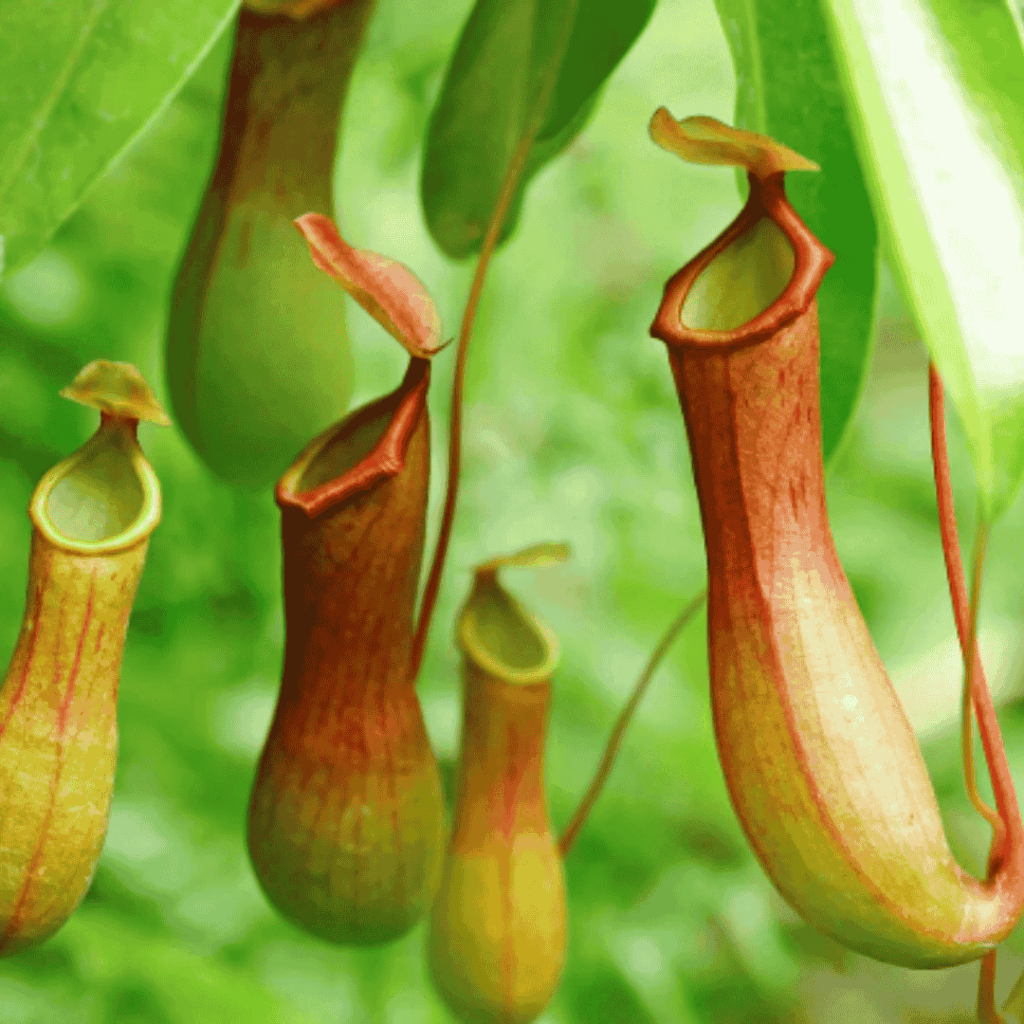
Pitcher plants produce a leaf tube in which the inside walls are coated in a slippery wax. Insects slip and fall into a pool filled with digestive enzymes and get broken down into food for the plant. Pitcher plants love a sunny spot in your house. A south facing window is perfect for them. If any pitchers dry up and start wilting away feel free to cut them off. This way the plant isn’t wasting energy on a fruitless trap.
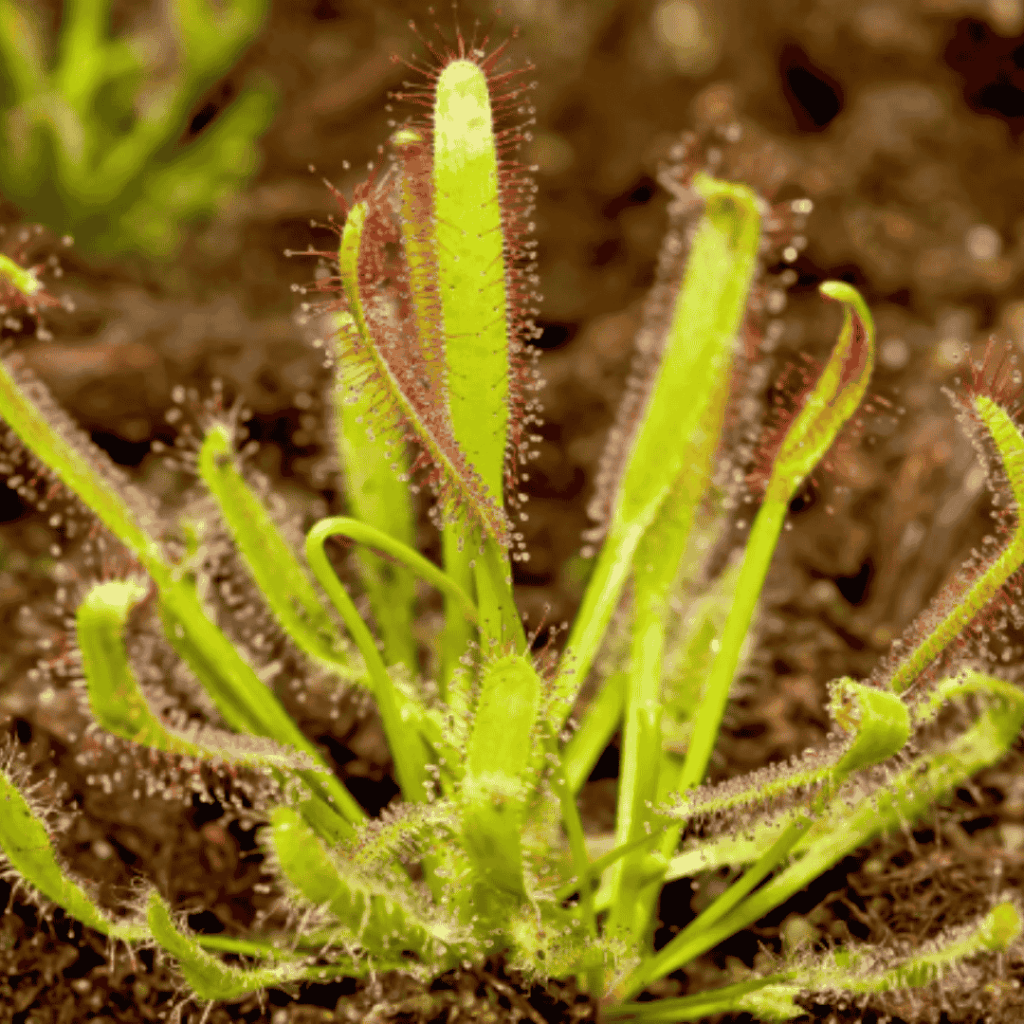
Sundews have hairy tentacles coated in sticky mucus that traps flying insects like fungus gnats. A fun fact about sundews is they are almost everywhere! They are found on every continent except for Antarctica! Sundews are technically an herbacious perennial so if you notice your plant die back in the winter don’t just assume it’s dead! You should see it flush out again in the spring just like your outdoor plants.
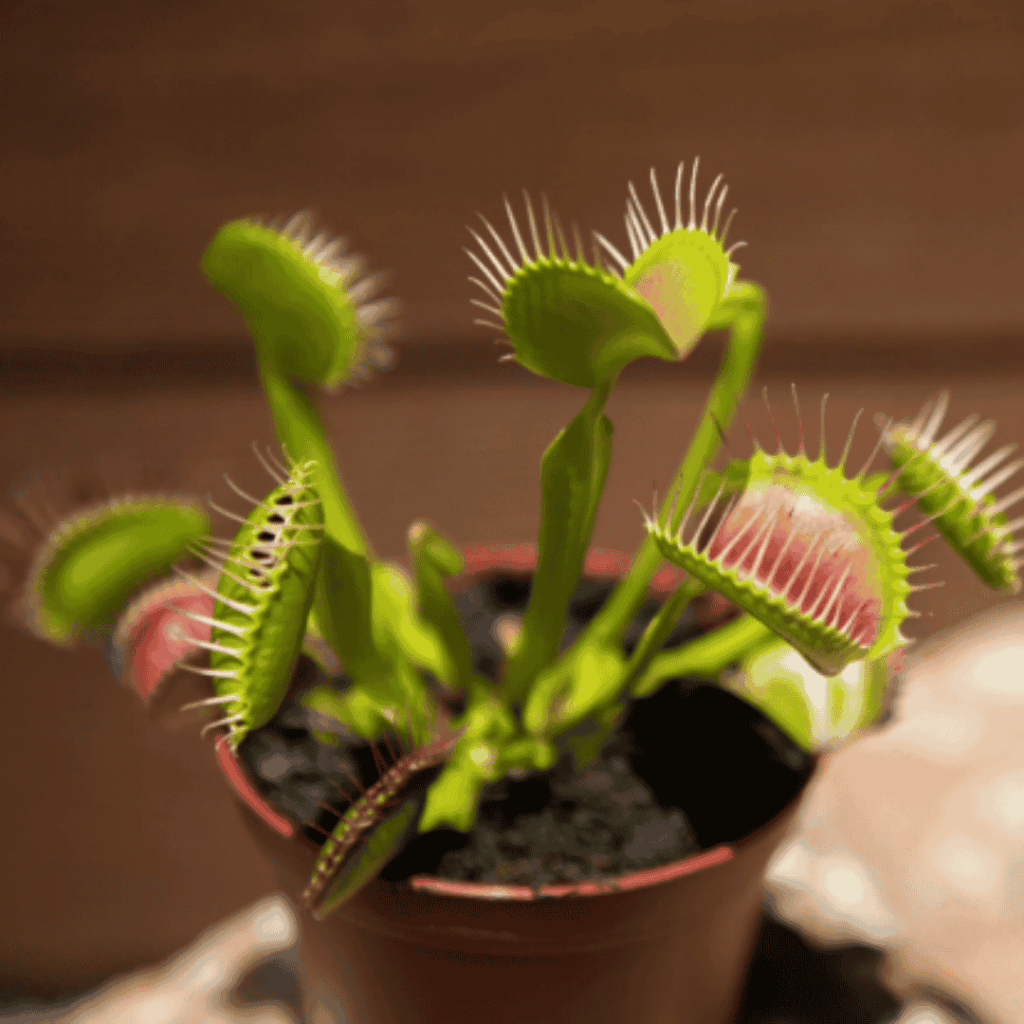
Venus flytraps operate like a mouse trap. Their trap is divided into two lobes that close on an insect when they activate a trigger hair. This whole process happens in less than one second! It’s important not to be tempted to stick your finger in there to trick the plant into chomping down on your finger. It takes a lot of energy for the venus fly trap to close in order to capture it’s prey so you definitely don’t want them to waste it on a fake out!
Carnivorous plants are almost exclusively found in bogs, devoid of many nutrients besides sunlight and water. When keeping them as indoor plants, they need to stay wet constantly. We recommend setting them in a tray of distilled water, as it is pure and mimics the low-nutrient content of their natural environment. If you don’t have a distiller, use tap water and flush them once a week with a bottle of distilled water from the grocery store. You’ll notice white sediment building on top of the soil if you use tap water. This is not mold. It is the minerals from tap water collecting on the surface. Distilled water will prevent this from happening.
Carnivorous plants have very specialized habitats and will only be able to produce and employ their traps when they are deprived of nutrients and getting lots of sunlight. They want a soil mixture made up of peat or sphagnum moss with sand and perlite. High humidity, warmth and lots of indirect light are essential. If this does not happen, as in the winter when light is low, they can go dormant. It’s common for pitcher plants and venus fly traps to turn black if it has gotten too cold, overwatered, or is at the end of its short life cycle. Most often they’ll go dormant to survive colder weather and this is totally normal. Trim off any dead leaves and reduce watering until spring. They should start producing new growth once temperatures rise and the days get longer.
Do not fertilize carnivorous plants. If they get too many nutrients from you, there will be no need for them to catch bugs and they won’t grow any pitchers or traps where’s the fun in that?! More often than not, ample sunlight will be enough to keep your carnivorous plants growing strong. Fertilizing should be the last thing on your mind or to-do list.
Growing carnivorous plants can be so rewarding, especially when you get to watch them catch an insect! There’s definitely a learning curve, so don’t give up, and don’t hesitate to reach out with questions!