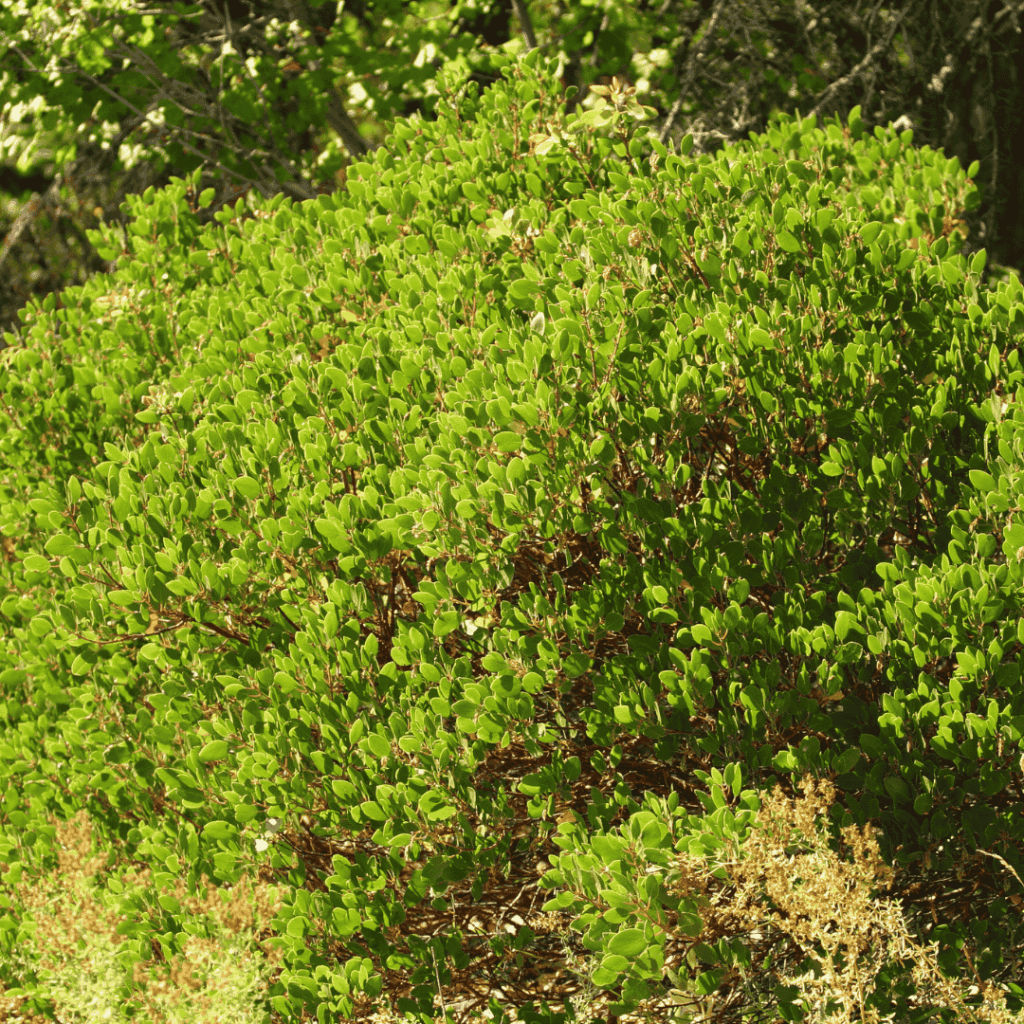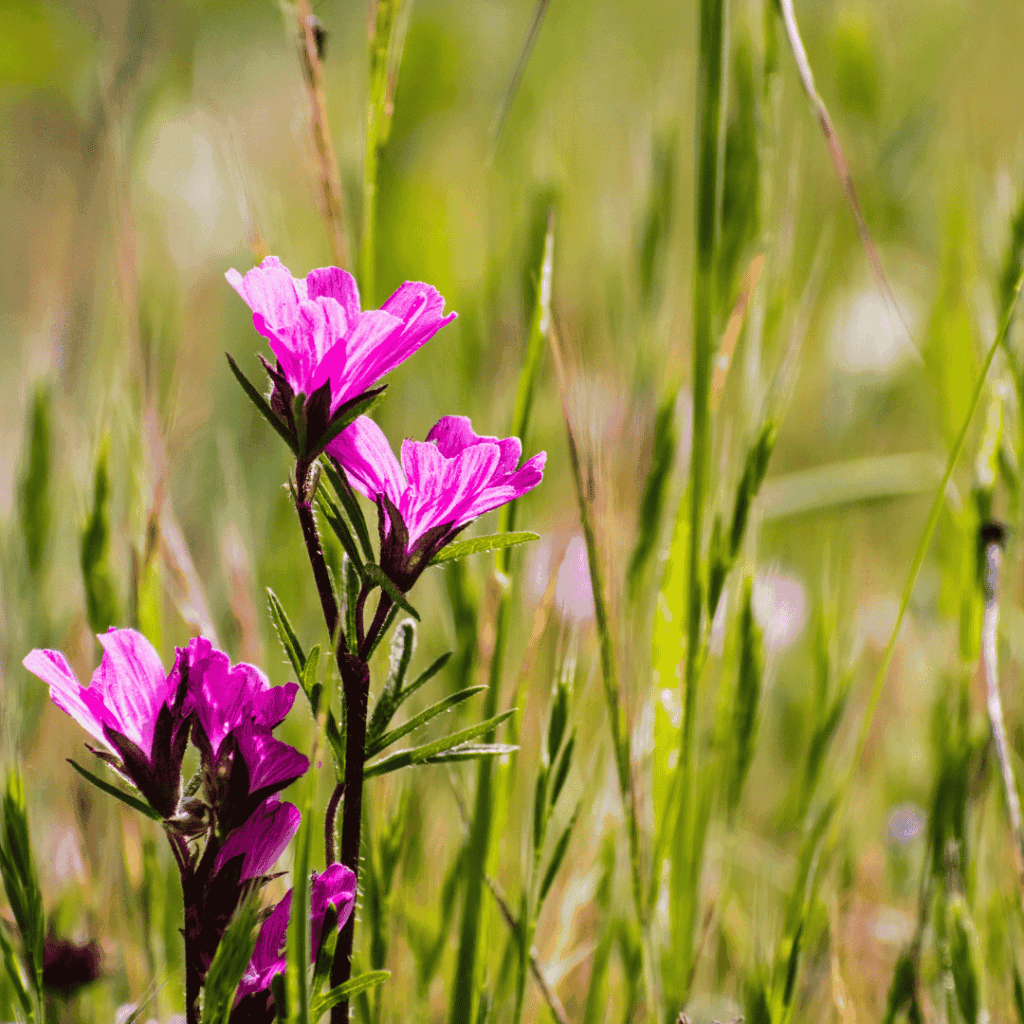
Greenleaf Manzanita (Arctostaphylos patula) is a native evergreen shrub that can stand alone in any landscape, with its glossy green leaves and bright, smooth reddish bark, it can be used as a focal point or backdrop.
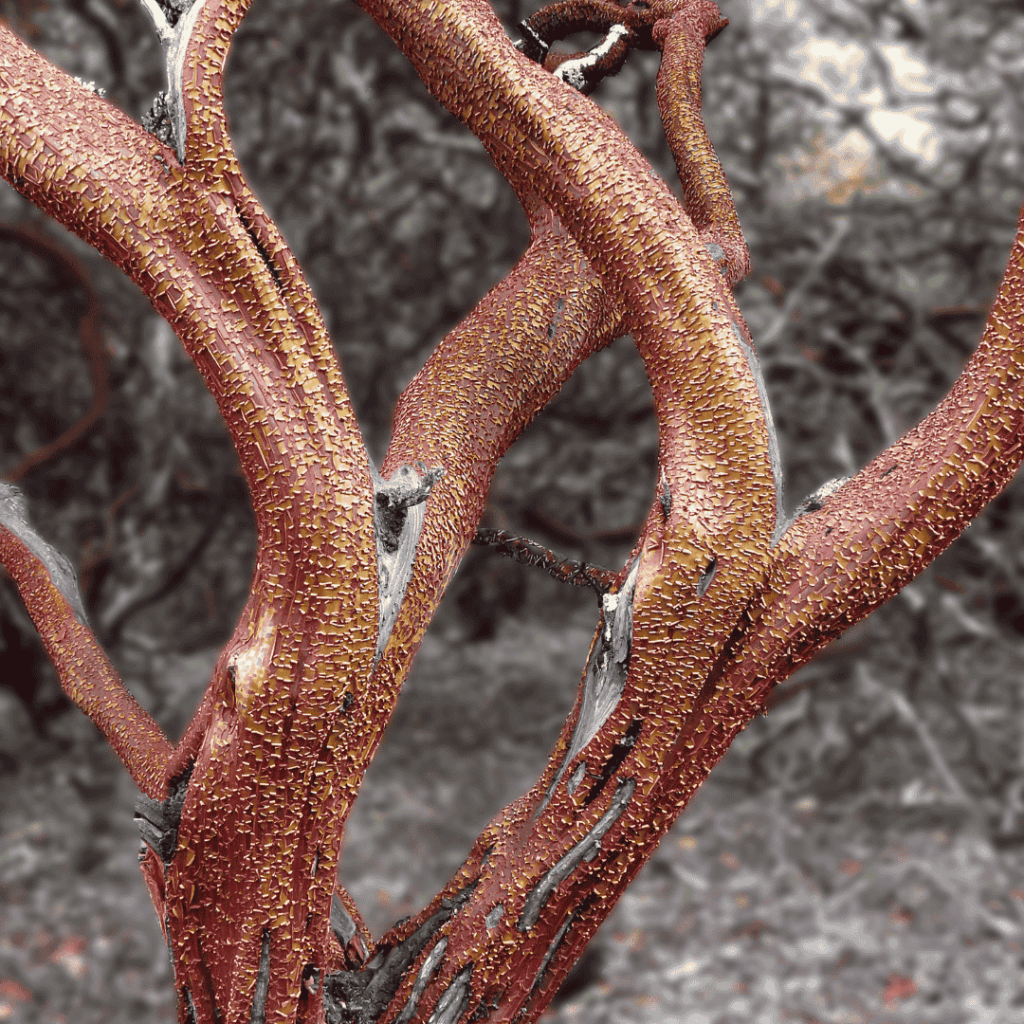
Greenleaf Manzanita can grow over 6 feet tall and about 6 feet wide. It has branches that grow low to the ground, sometimes even rooting into the soil, while other branches grow up and outward. The stem is twisted with reddish-brown colored bark that is shiny due to granular secretion. Leaves are oval-shaped to almost round. They are flat, shiny and smooth and can get about 2 ½ inches long and up to 4 inches wide.
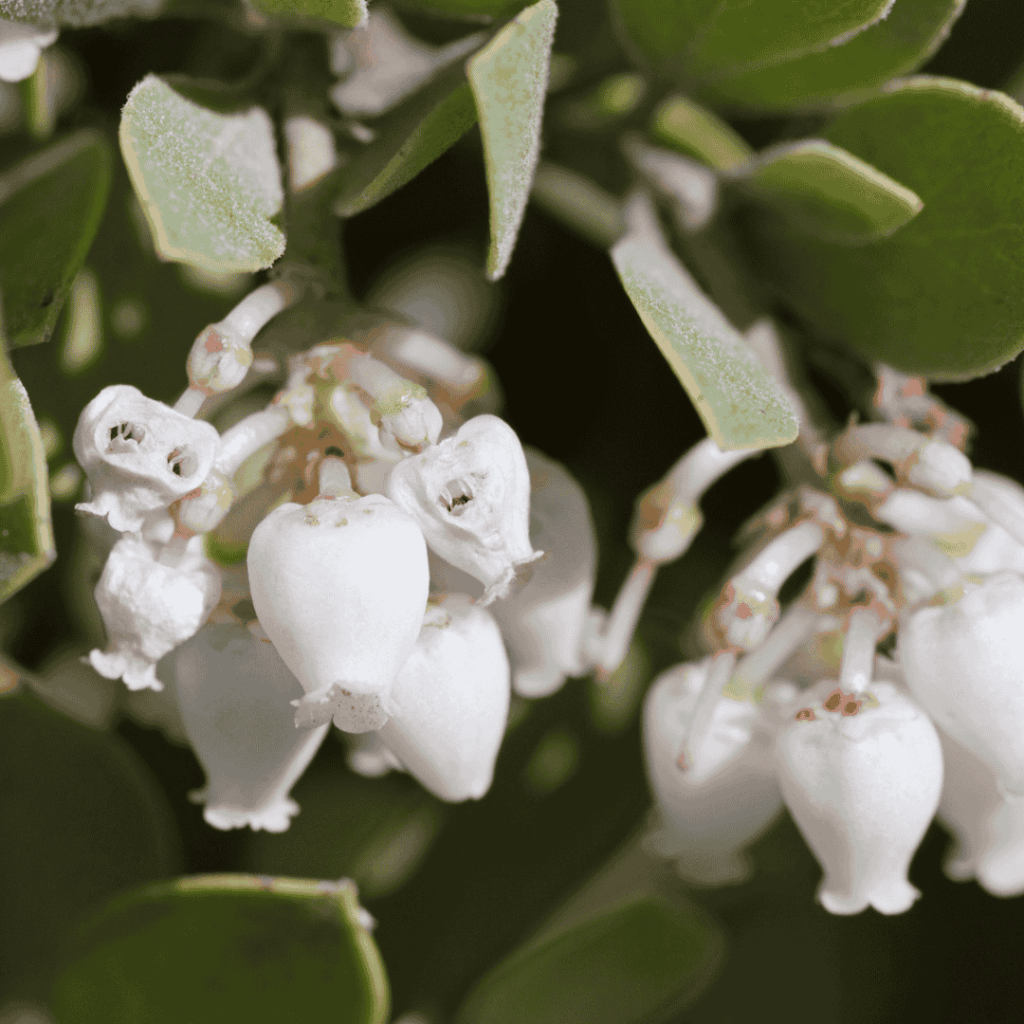
Flowers are white to pink and urn-shaped, hanging in bunches. Hummingbirds especially love the Manzanita because of the bell shaped flowers that are rich with nectar. The fruit is dark brown drupes containing about 5 seeds that can be fused. Fruit is edible when fully ripe and can be dried, ground into a powder and used for baking. Seeds are primarily dispersed by birds and medium to large mammals, such as bears, coyotes and foxes. Seeds require fire followed by cold conditions in order to germinate. Plants that need fire to reproduce are called Pyrophytes. Seeds can remain dormant in the soil for hundreds of years.
Greenleaf Manzanita grows in full sun to part shade and thrives in temperate climates with moderate temperatures. Prefers well drained sandy soil and can be found growing anywhere from 1,500 to 12,000 feet in elevation.
One of the most widely spread manzanita species, Arctostaphylos patula can be found growing in coniferous forests from Washington state down to Baja California, with its Eastern edge being the state of Colorado.