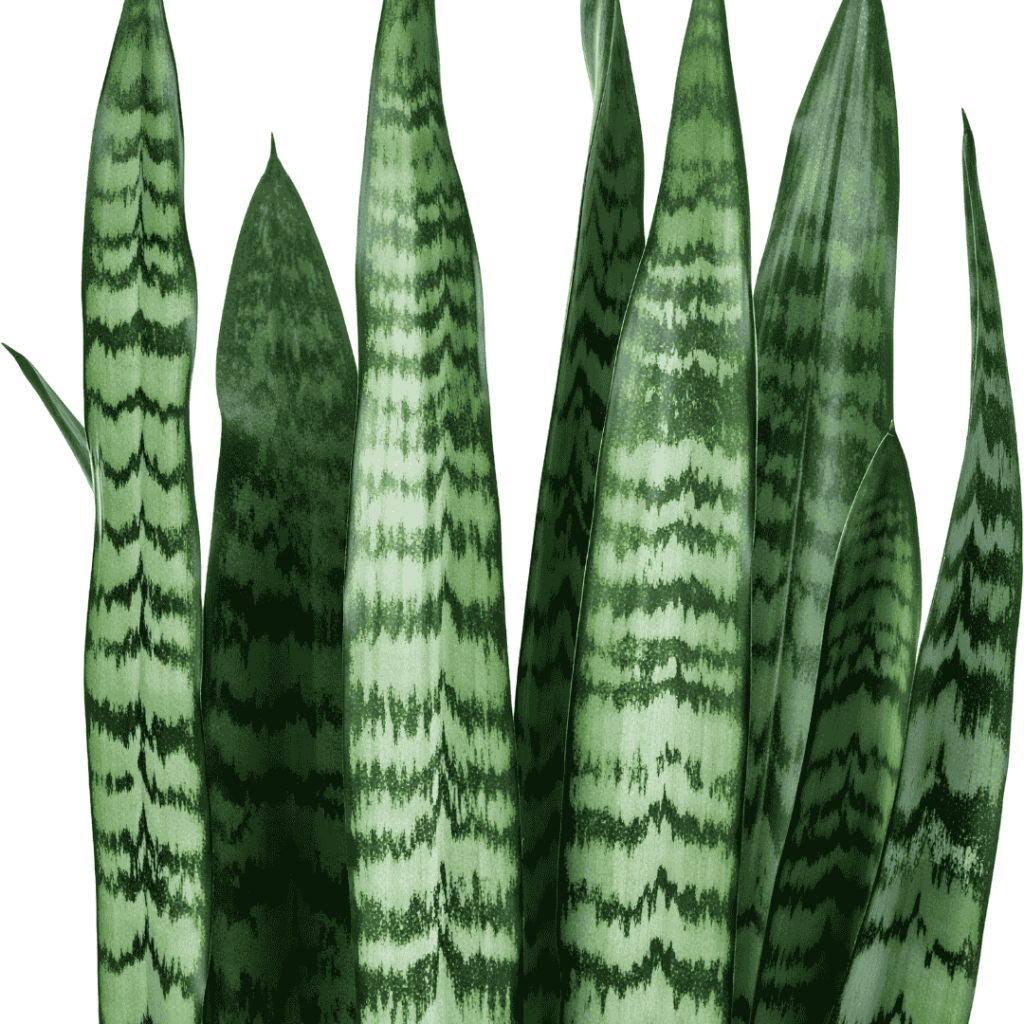
Commonly known as snake plants and mother in law’s tongues, Sansevieria is truly a singular specimen! It’s a striking architectural contrast to all the leafy houseplants out there. Pointed leaves spear up from matted tubers, piercing the air like clusters of swords. They’re one of the handful of indoor plants that thrive on neglect, as overwatering is their arch nemesis! You’ll also find them at the top of the list of plants that purify your home.
Sansevieria are native to Africa and Southern Asia and can be found springing from desert landscapes in clusters, spreading by their prolific networks of rhizomes. Thriving in areas that experience long periods of drought makes them so intolerant to over watering. For as easy as this plant is we mean it when we tell you that literally one overwatering and you can typically count on kissing your plant goodbye.
A unique feature of Sansevieria is that they love being snug in their pots. Only repot when they have filled up their entire pot and there is no more room in the pot to throw up new shoots. Hold off on repotting if a brand new shoot is just starting to poke up from the soil. Stressors like transpant shock have detrimental effects on tender new pups. Snake plants will grow more robustly if left in the plastic nursery pot they come in. This way they can push their rhizomes against it which offers more give than a stiff ceramic pot. That doesn’t mean you can’t put it in a pretty ceramic pot! You can simply nest the plastic pot inside your decorative pot and no one will even know the difference! Got a gap between the plastic nursery pot and your pretty ceramic one? Just use some decorative moss to fill the gap and brighten up the look all together. If you absolutely have to have your snake plant in ceramic then terra cotta pots are the best style for snake plants because they wick out excess moisture. Just make sure you have a saucer underneath to catch the condensation!
Soil composition should be loose and well draining. Compact soil with anything in the realm of moss or clay will hold too much moisture and lead to root-rot. Buy a bag of our cactus mix and throw in some extra perlite for extra aeration.
Another thing to love about Sansevieria is that they can handle a dark corner or a bright window. While they are considerably adaptable, you’ll see faster growth and punchier colors in bright, indirect light.
Keep to a watering schedule of about every 2-4 weeks. Err on the side of underwatering. Use your finger to feel the first few inches of soil and feel the weight of the pot when you pick it up as your gauge. You want a considerably light pot and completely dry soil before it’s time to water. Be wary of overhead watering. It’s fine to water the surrounding soil, but try not to pour it in the middle of the plant where the leaves meet, these spaces sometimes form rosettes that are perfect water holders. Sitting water will create soggy leaves and soil and ultimately cause your plant to pass away.
Propagating a Sansevieria is as easy as snipping off a leaf, cutting a “v” out of the bottom and popping it into shallow water! Use a clear jar so you can monitor root growth. Be very patient as it will take longer than most plants to put roots out.
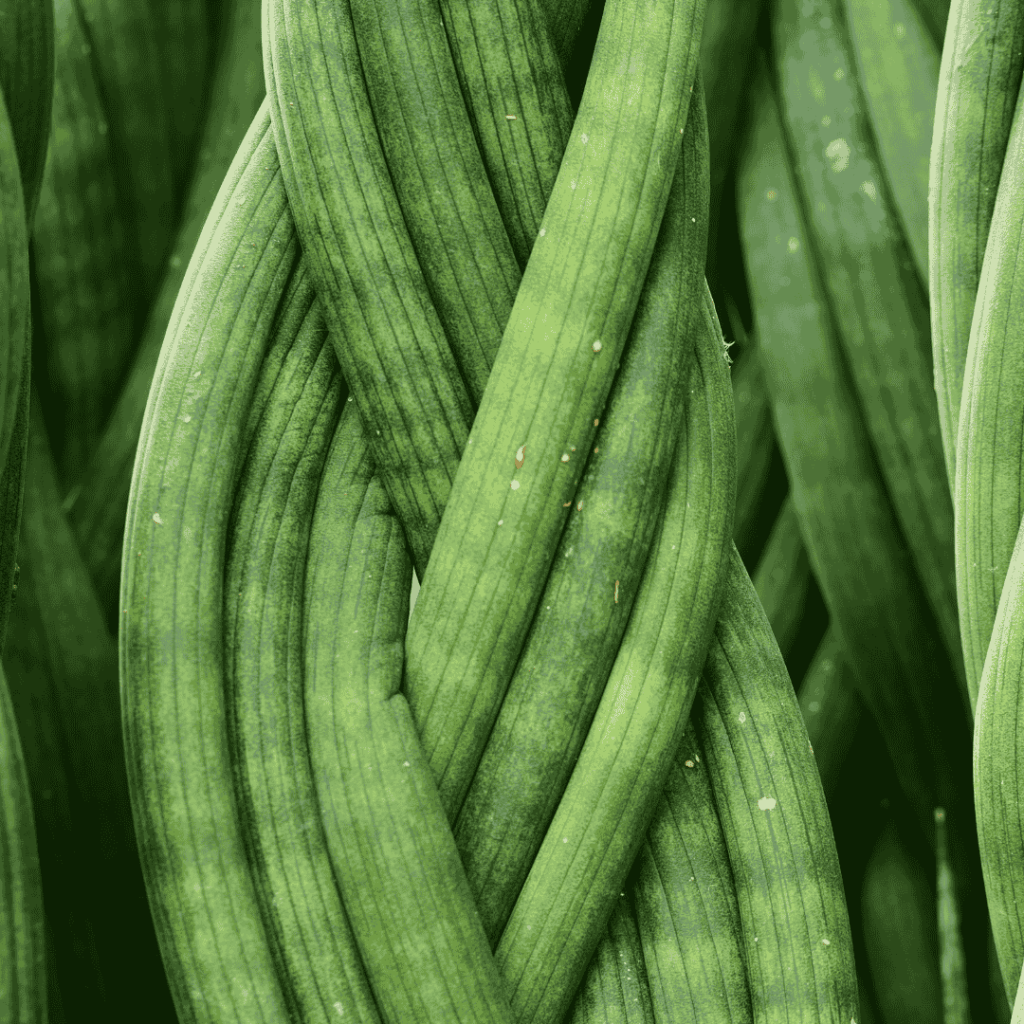
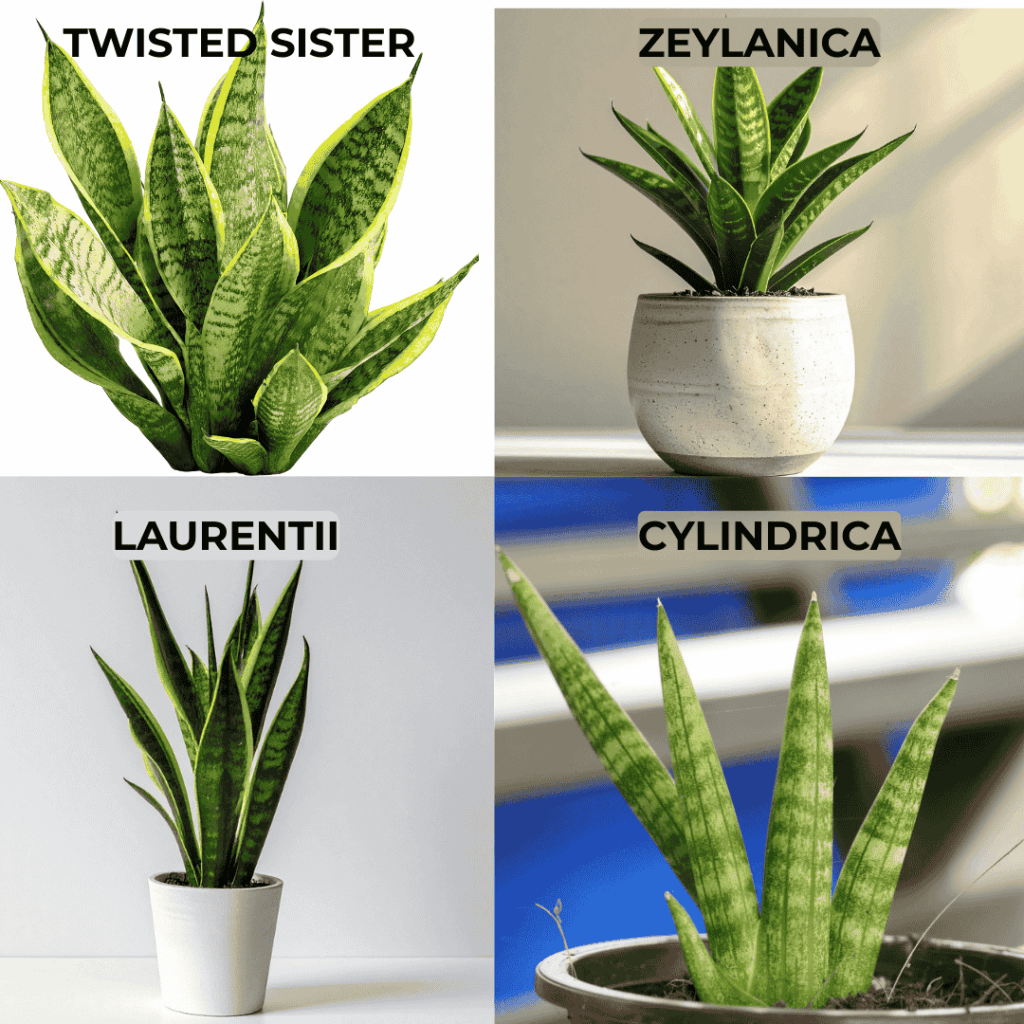
There are so many different varieties of snake plants to choose from that it can be difficult to make a choice! Likely you will find yourself over time collecting them all. Whether you are called to the dark green of the zeylanica or moved by the variegation of the laurentii you can’t go wrong. Need something with more pizazz? Look for the twisted sister the next time you are plant shoping. She has the same look as the laurentii yet twists and turns her swords to stand out in a unique way. The cylindrica has more of a spear shape rather than a sword. Growers will sometimes show some flair by propogating them to grow in a fan-like shape that we like to call “Edward scissor hands” here at the nursery. If they really want to show off they will braid them like you see here in the picture.