Western yarrow (Achillea millefolium) is a medium sized perennial native to North America, Europe and Asia. Yarrow has a long history of medicinal and cultural uses and has even been found with Neanderthal burials, suggesting that its association with humans dates back at least 60,000 years ago. It was used in ancient times to heal wounds and stop bleeding and in the 16th century. For instance, the crushed leaves were used to stop nosebleeds. Many Native people of the Pacific North West used dried Yarrow and yarrow tea to keep away flies and mosquitoes. It was used to relieve ear, tooth and headaches, as well as to heal cuts and abrasions. The tea was also used as an eyewash, a cold remedy or to reduce swelling.
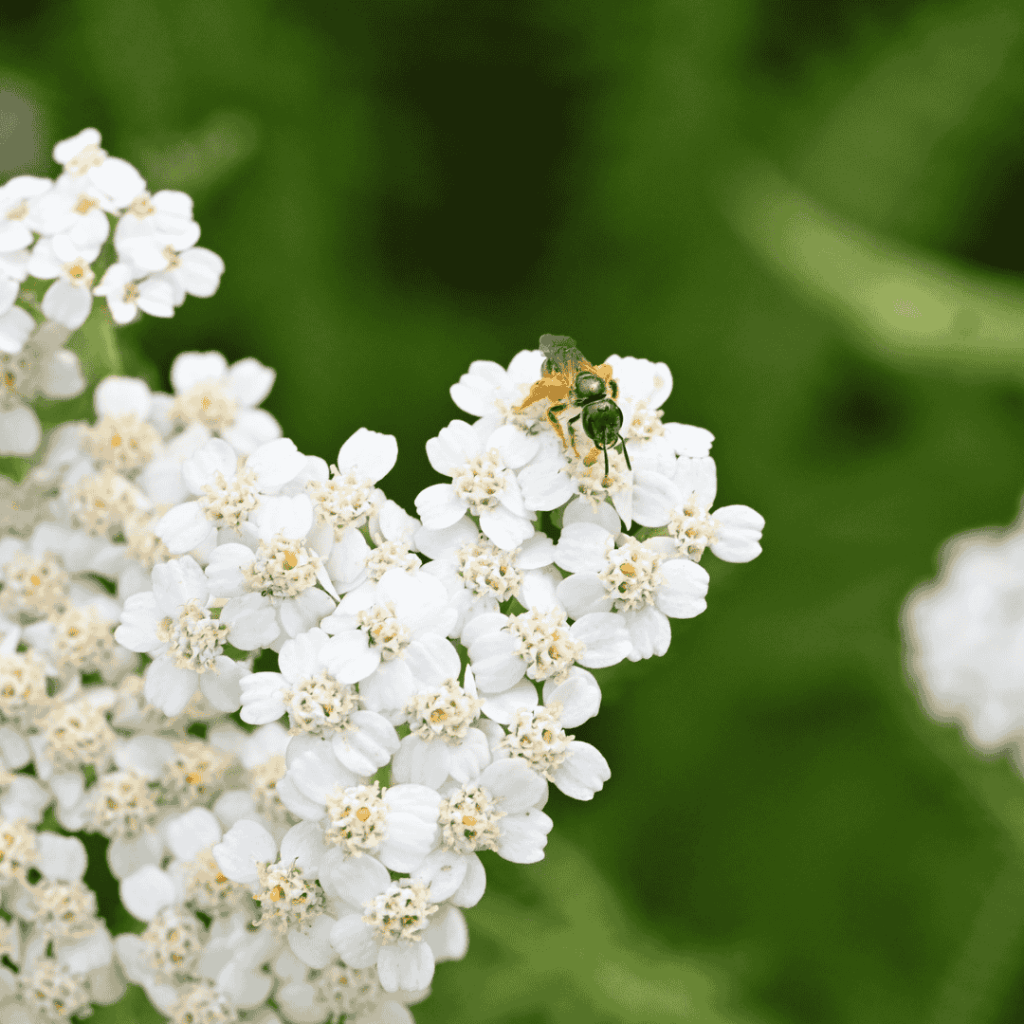
Considered one of the most widely distributed native wildflowers in the Western United States, yarrow attracts many different species of bees, butterflies and other insects. Several cavity-nesting birds, including the common Starling, line their nests with yarrow. Studies suggest that using yarrow in nest building limits parasites in the nest.
Western yarrow grows erect up to 3 feet tall from a creeping root stock. It has a spreading, rhizomatous growth form and produces one to several stems. The flowers are tiny, daisy-like florets grouped in broad, flat topped clusters. The small white to pink flowers bloom from April to August. The leaves are aromatic, silver green and fern-like in appearance.
Western yarrow grows in full sun to part shade and prefers well drained soil. It can tolerate heat and drought, as well as various pH levels, but do not overwater! Yarrow can get leggy from overwatering or too much shade. Yarrow can propagate easily by dividing clumps in spring or fall, from cuttings or seed. Seeds can be collected in the fall and sown directly into the soil. Seeds require light and temps of 64 to 75 degrees to germinate.
Achillea millefolium is found all over the world. It grows in temperate regions and can be found growing from sea level to Alpine zones with elevations reaching 11,500 feet. Yarrow grows in many different habitats including disturbed sites,flowing water, forest, grasslands and meadows. It can even be found growing in open sandy areas like dunes and beaches.